


Spirit Academy › Bar Craft › Bar Craft, Tasting & Labels
Bar Craft, Tasting & Labels
How drinks are built, tasted, poured and labeled: technique, cocktail families, glassware, tasting method and the law printed on every bottle.
In one sip
Bar craft is everything that happens between the bottle and the glass: how a drink is measured, chilled, diluted and served, how you taste what is in front of you, and how you read the label before you buy. None of it needs a professional bar. It needs knowing why the rules exist, and that is what this corner of the Academy covers.
Where it started
Mixing spirits with sugar, water and bitters is older than the word for it. The name and the formula first appear together in print in Hudson, New York, in 1806, when a local newspaper defined the Cock-Tail as a stimulating liquor of spirits, sugar, water and bitters.1 The iced Cocktail is first mentioned in print in New York in 1840.2
In June 1862 the New York firm of Dick & Fitzgerald published Jerry Thomas's Bar-Tender's Guide, also known as How to Mix Drinks, or the Bon-Vivant's Companion.3 The Smithsonian Libraries call it the first recipe book for mixed drinks published in the United States.4 Thomas sorted his drinks into classes: cobblers, cocktails, fixes, juleps, punches, sours, slings, smashes and toddies. Only two of the drinks were his own inventions, the flaming Blue Blazer and the Japanese Cocktail.3 In 1948 David Embury, a New York tax attorney who never worked in the drinks trade, published The Fine Art of Mixing Drinks and built it around six basic drinks.5
The trade organized itself after the Second World War. The International Bartenders Association was established in Torquay, England, on 24 February 1951 by seven national guilds.6 Its first official cocktail list, 50 drinks, was approved in 1961.7 The modern revival that brought fresh juice and stirred drinks back to bars, the cocktail renaissance, runs from roughly 2004 through 2019.8
Where and how it's made
Four skills sit under this hub.
Technique
Shaking and stirring are the two primary ways to mix a drink. Shaking chills and dilutes faster than stirring and adds air.9 Ice does almost all of its cooling by melting, so the water it adds is part of the recipe, not an accident.10
Families
Most drinks follow a handful of templates: spirit with sugar and bitters, spirit with citrus and a sweetener, spirit with vermouth, spirit lengthened with soda. Knowing the template tells you how to fix a drink that tastes wrong.
Tasting
The Wine & Spirit Education Trust (WSET) breaks tasting into appearance, nose and palate, followed by a conclusion on quality.11
How to taste it
Taste a cocktail the way you taste a spirit: look, smell, then sip. A balanced drink is one where sweet, sour, bitter and strong are in harmony, with none dominating or masking the others.14 If a sour tastes flat, it usually wants more citrus; if a stirred drink tastes hot, it usually wants more stirring. Pairings: salted nuts with a highball, olives with a Martini, sharp cheddar with a Manhattan.
Styles and what the label means
Words to know
Tap a term to get asked about it in The Tasting Room.
Start here — craft pours to try
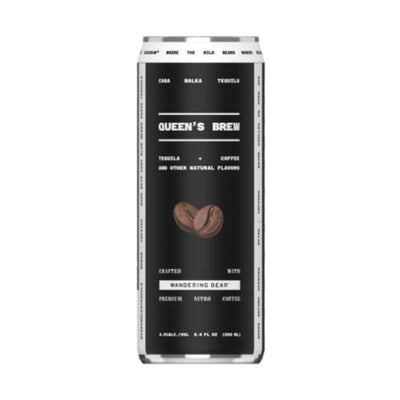
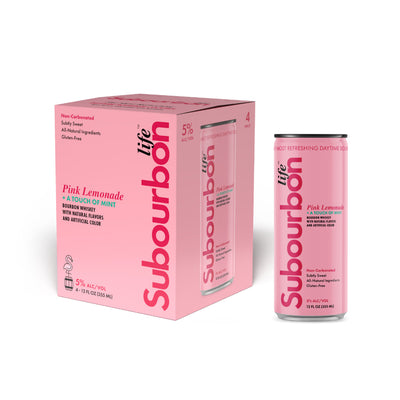
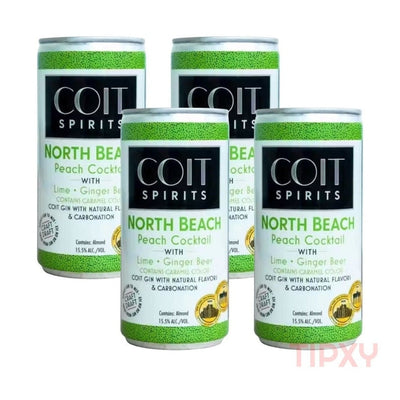
Real bottles from craft makers on Tipxy.
Sources
- Oxford Companion to Spirits & Cocktails — Cock-Tail accessed 2026-10-12
- Oxford Companion to Spirits & Cocktails — cocktail accessed 2026-10-12
- Oxford Companion to Spirits & Cocktails — Thomas, Jeremiah P. “Jerry” accessed 2026-10-12
- Smithsonian Libraries — How to Mix Drinks (Jerry Thomas, 1862) accessed 2026-10-12
- Oxford Companion to Spirits & Cocktails — Embury, David A. accessed 2026-10-12
- International Bartenders Association — About us accessed 2026-10-12
- International Bartenders Association — IBA Official Cocktail List accessed 2026-10-12
- Oxford Companion to Spirits & Cocktails — cocktail renaissance accessed 2026-10-12
- Oxford Companion to Spirits & Cocktails — To shake accessed 2026-10-12
- Oxford Companion to Spirits & Cocktails — dilution accessed 2026-10-12
- WSET Level 2 Systematic Approach to Tasting Wine (Issue 2, 2023) accessed 2026-10-12
- 27 CFR 5.1 Definitions (eCFR) accessed 2026-10-12
- 27 CFR 5.63 Mandatory label information (eCFR) accessed 2026-10-12
- Oxford Companion to Spirits & Cocktails — balance accessed 2026-10-12
- Oxford Companion to Spirits & Cocktails — The base accessed 2026-10-12
- Oxford Companion to Spirits & Cocktails — modifier accessed 2026-10-12
- Oxford Companion to Spirits & Cocktails — rocks accessed 2026-10-12
- Oxford Companion to Spirits & Cocktails — classic cocktail accessed 2026-10-12
- Oxford Companion to Spirits & Cocktails — mocktail accessed 2026-10-12
- Oxford Companion to Spirits & Cocktails — Highball accessed 2026-10-12
Photo: DWS-Montag Zen, CC BY-SA 3.0, via Wikimedia Commons