

Spirit Academy › Bar Craft › Reading the Label
Reading the Label
ABV and proof, age statements, appellations, 'straight' and 'handmade': which words on a bottle are law and which are marketing.
In one sip
A spirits label is a legal document with a sales pitch printed around it. The regulated parts, class and type, alcohol, age and origin, tell you what is in the bottle. The unregulated parts, such as "small batch" or "handmade," tell you how the producer wants you to feel.
Where it started
Proof is older than the percentage, though sources date Britain's legal standard differently. The Oxford Companion says Parliament fixed proof spirit in 1762 at a specific gravity of 0.916 at 60°F, about 57 percent alcohol by volume.1 ScotchWhisky.com has Customs adopting Clark's hydrometer in 1740, replaced by Sikes's in 1816 and enshrined in law in 1818.23 U.S. law now defines proof as twice the percentage of alcohol by volume at 60 degrees Fahrenheit.2 The EU's rulebook for comparison is Regulation (EU) 2019/787.17
Where and how it's made
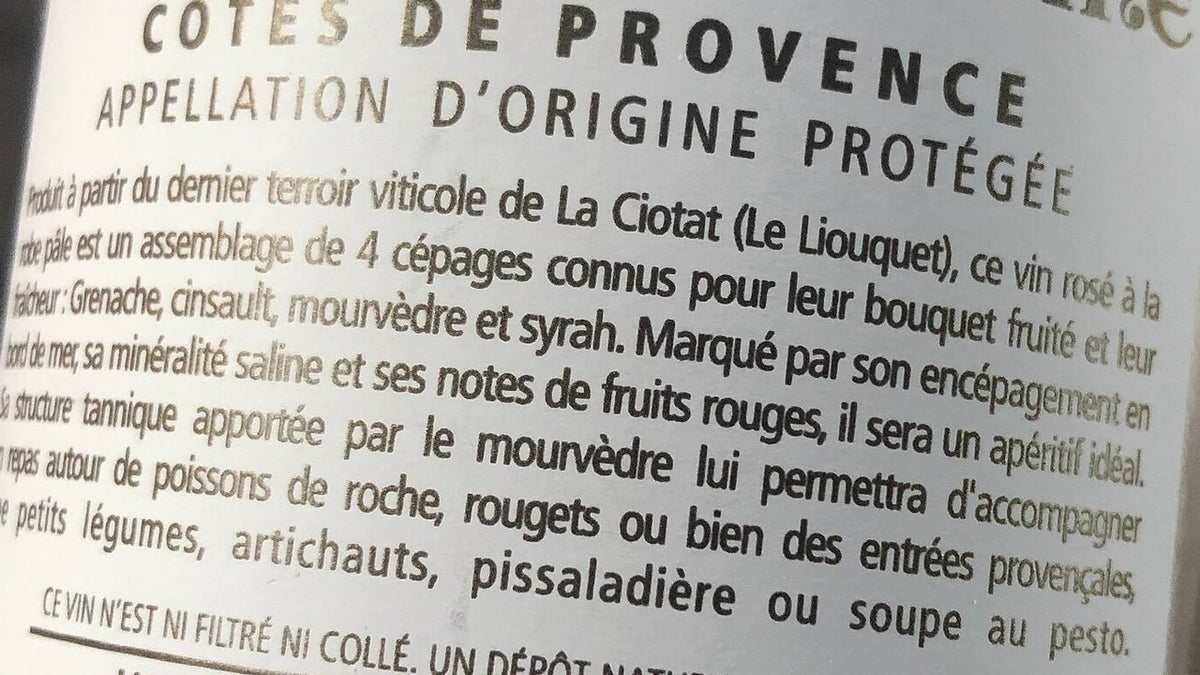
Brand name, class or type, and alcohol content must sit in the same field of vision; on a round bottle a side is 40 percent of the circumference.3 Alcohol is stated as a percentage by volume, such as "40% alc/vol"; proof is optional but must appear in the same field of vision, and the real strength may vary 0.3 percentage points either way.4
The name statement tells you who did what. "Distilled by" names the distiller, "bottled by" the bottler, and "produced by" signals processing that changed the class or type, such as adding flavors.5
Age means time in oak between distillation and bottling.2 Understating age is allowed and overstating it is not; neutral spirits other than grain spirits may make no age claim at all. "Old" in a brand name is not an age claim, and a distillation date may appear only alongside an age statement.7 Brandy, rum, Tequila and non-straight whisky may use caramel color without a label statement, with a 2.5 percent limit; American single malt must declare any caramel at all.6
Minimum strengths differ across the Atlantic. U.S. gin and brandy are bottled at not less than 40 percent.1112 In the EU, whisky starts at 40 percent, gin and vodka at 37.5, brandy at 36, and spirit drinks in general at 15, with egg liqueur the one exception at 14.17
How to taste it
Read the back label first. "Distilled by" tells you the brand ran the still; "bottled by" alone may not. Then taste two bottles of one style at different proofs, adding water to the stronger. Pairings: a bottled-in-bond bourbon with country ham, a VS cognac with dark chocolate.
Styles and what the label means
- Straight — an optional further designation of a whisky type; liqueurs may never use it.1013
- Bottled in bond — one distiller, one season, four years, 100 proof.24 bottled-in-bond →
- Barrel proof / cask strength cask-strength →
- Age statements and NAS age-statements-and-nas →
- VS and XO — on cognac, youngest component at least two and ten years; U.S. brandies using the terms have no minimum.1920
- Wine appellation — a state or county name needs 75 percent of the fruit from there, an AVA 85 percent.15
- Vintage — 95 percent from that harvest with an AVA, 85 percent otherwise.16
- Varietal — a single grape name needs at least 75 percent of that grape, or 51 percent for a Vitis labrusca variety.14
- Small batch — not a federally defined term.18
- Handmade, handcrafted — every claim needs a reasonable basis in fact.8
- Kosher — certified by an agency such as the Orthodox Union; a spirit aged in a cask that held non-kosher wine cannot be kosher.22
Words to know
Tap a term to get asked about it in The Tasting Room.
Start here — craft pours to try
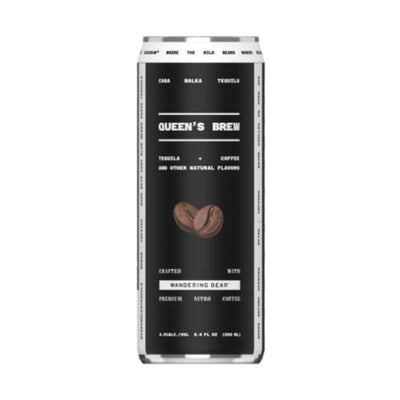
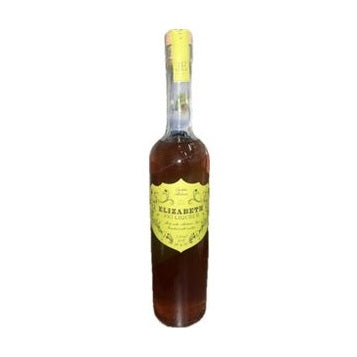
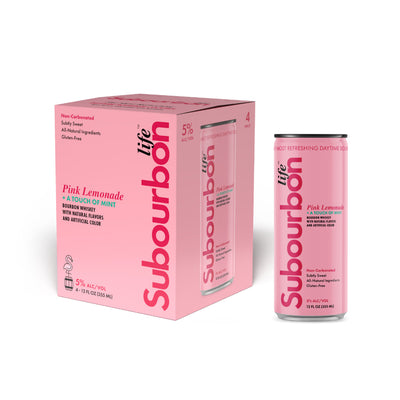
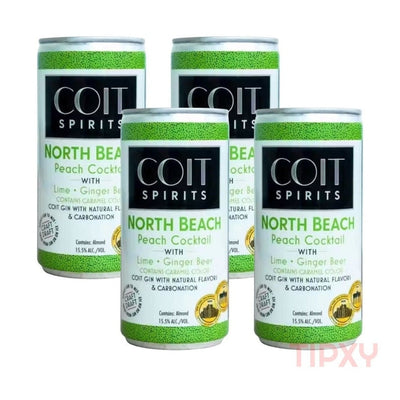
Real bottles from craft makers on Tipxy.
Sources
- Oxford Companion to Spirits & Cocktails — proof accessed 2026-10-12
- 27 CFR 5.1 Definitions (eCFR) accessed 2026-10-12
- 27 CFR 5.63 Mandatory label information (eCFR) accessed 2026-10-12
- 27 CFR 5.65 Alcohol content (eCFR) accessed 2026-10-12
- 27 CFR 5.66 Name and address for domestically bottled distilled spirits (eCFR) accessed 2026-10-12
- 27 CFR 5.72 Coloring materials (eCFR) accessed 2026-10-12
- 27 CFR 5.74 Statements of age, storage, and percentage (eCFR) accessed 2026-10-12
- 27 CFR 5.122 Misleading statements or representations (eCFR) accessed 2026-10-12
- 27 CFR 5.141 The standards of identity in general (eCFR) accessed 2026-10-12
- 27 CFR 5.143 Whisky (eCFR) accessed 2026-10-12
- 27 CFR 5.144 Gin (eCFR) accessed 2026-10-12
- 27 CFR 5.145 Brandy (eCFR) accessed 2026-10-12
- 27 CFR 5.150 Cordials and liqueurs (eCFR) accessed 2026-10-12
- 27 CFR 4.23 Varietal (grape type) labeling (eCFR) accessed 2026-10-12
- 27 CFR 4.25 Appellations of origin (eCFR) accessed 2026-10-12
- 27 CFR 4.27 Vintage wine (eCFR) accessed 2026-10-12
- Regulation (EU) 2019/787 on spirit drinks (EUR-Lex) accessed 2026-10-12
- Oxford Companion to Spirits & Cocktails — small batch accessed 2026-10-12
- Oxford Companion to Spirits & Cocktails — VS accessed 2026-10-12
- Oxford Companion to Spirits & Cocktails — XO accessed 2026-10-12
- Oxford Companion to Spirits & Cocktails — Geographical Indication (GI) and PDO accessed 2026-10-12
- Oxford Companion to Spirits & Cocktails — kosher spirits accessed 2026-10-12
- ScotchWhisky.com — Why does 'proof' have multiple meanings? accessed 2026-10-12
- 27 CFR 5.88 Bottled in bond (eCFR) accessed 2026-10-12
Photo: Wiki.cullin, CC BY-SA 4.0, via Wikimedia Commons