

Spirit Academy › Bar Craft › Bar Technique
Bar Technique
Shake or stir, how much ice melts into your drink, why ratios matter, and the tools that do the work: jigger, bar spoon, shaker, strainer.
In one sip
Every cocktail is mixed, chilled and diluted, and the method decides the texture. Shake drinks with juice, cream or egg; stir drinks made only of spirits, vermouths and liqueurs. Measure everything, use plenty of cold ice, and taste before you pour.
Where it started
Shaking grew out of "rolling" or "throwing," pouring a drink back and forth between two vessels, and was established in the United States by the 1840s, once iced drinks were common.1 The first recorded shaker use is from New York in 1850, a bartender working with a tin cup over a glass.14 The first stainless steel mixing tins arrived in 1919.14 Jiggers replaced sherry and liqueur glasses as measures in the 1870s.11 The Hawthorne strainer takes its name from the Hawthorne Café in Boston, whose manager had the holes in an 1892 patented spring strainer arranged to spell the name.10
Where and how it's made
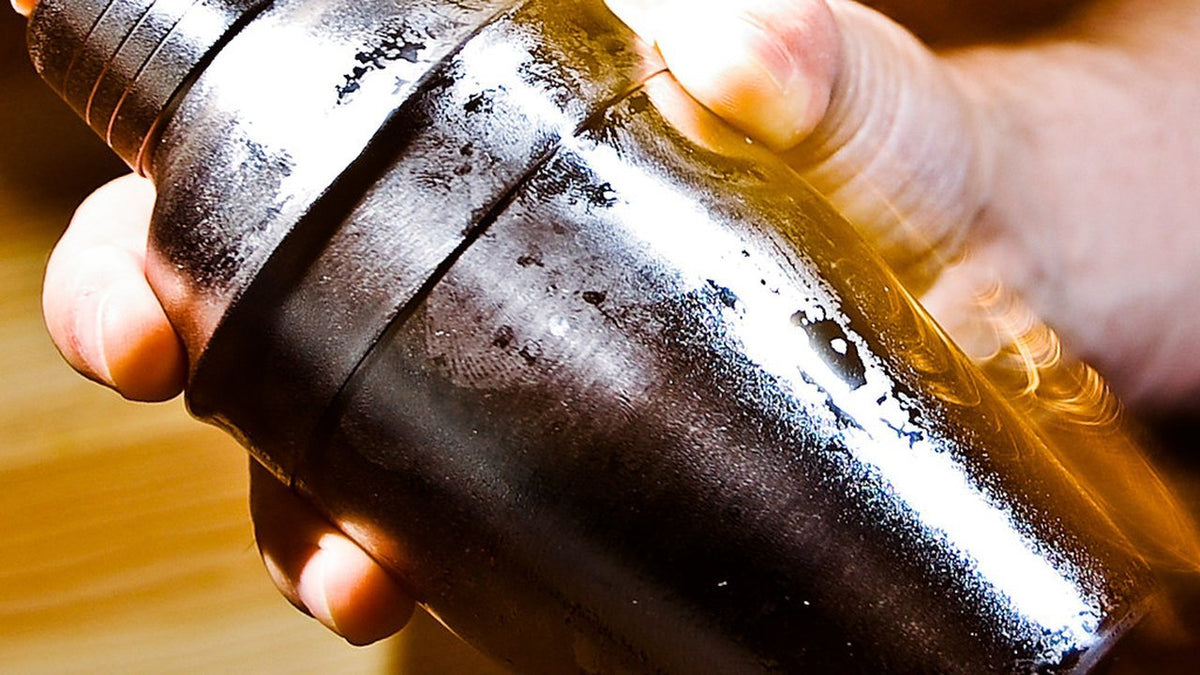
Shake or stir. The rule of thumb: shake a drink if it contains fresh, nonalcoholic ingredients such as citrus, dairy, fruit or herbs, or more simply, if it's cloudy.1 Stir drinks made only of alcohol-based ingredients, such as the Manhattan, Old-Fashioned and Martini, to keep them clear and silky.2 As Kazuo Uyeda put it, shaking takes the bite off alcohol and stirring leaves it in.2
How long. Shaking chills and dilutes faster, so 8 to 12 seconds is typical.1 Stirring typically takes 15 to 30 seconds.2 Simon Difford puts it another way: 15 to 20 seconds of shaking matches 90 to 120 seconds of stirring for chill and dilution.5
Dilution. Ice chills almost entirely by melting, which is why it outperforms anything that does not melt, and why chilling and dilution are linked.34 Melting a gram of ice takes 80 calories, against 9 to warm it from freezer temperature to its melting point.4 The amount of ice decides how cold a drink can get; the surface area decides how fast.4 Difford measures roughly 25 percent dilution from a shake and about 20 percent from a stir with his ice.6
Ratios. Proportions let you scale a recipe without losing balance; a classic sour once ran 22 ml sour, 30 ml sweet and 45 ml strong, and now often 22 sour, 22 sweet, 60 strong.19
Eggs. A dry shake, without ice and followed by a shake with ice, helps egg white foam; bartender Chad Solomon popularized it in the early 2000s.8
How to taste it
Taste through a straw or a spoon before you pour. Underdiluted drinks taste hot; overdiluted ones taste flabby. Fill the shaker two-thirds with fresh ice and hold it with both hands.7 Pairings: a Daiquiri with ceviche, a Manhattan with cheddar.
Styles and what the label means
- Boston and French shakers — a tin paired with a glass (Boston) or with a smaller tin (French).7
- Cobbler shaker — three pieces with a built-in strainer and cap; Hauck's 1884 patent became the style bars and homes widely adopted.1314
- Double strain — a Hawthorne or julep strainer plus a fine mesh strainer, to catch herbs, pulp and ice chips.9
- Rolling — pouring between tins to chill without aerating, traditional for tomato juice.20
- Float — a layer poured over the back of a spoon on top of a drink.21
- Hard shake — Kazuo Uyeda's triangular shaking style; Dave Arnold found no measurable advantage.22
- Recipes to practice on. cocktail-families →
Words to know
Tap a term to get asked about it in The Tasting Room.
Start here — craft pours to try
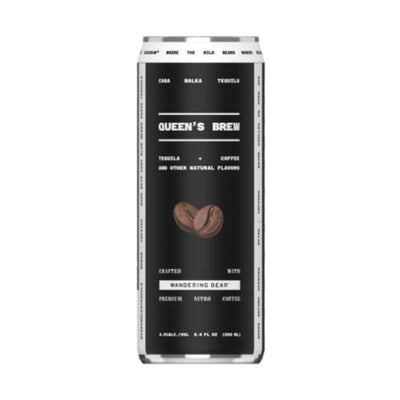
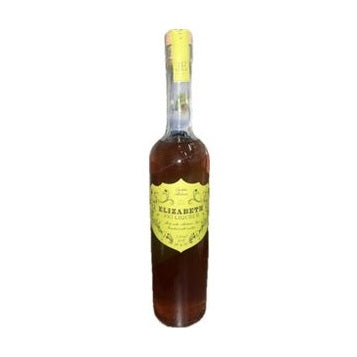
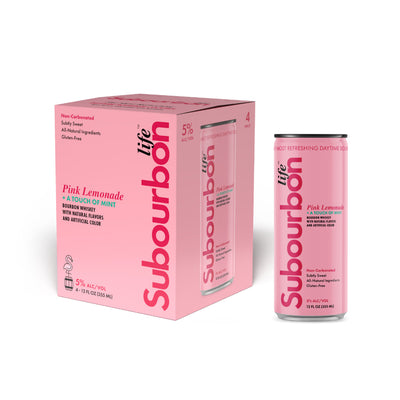
Real bottles from craft makers on Tipxy.
Sources
- Oxford Companion to Spirits & Cocktails — To shake accessed 2026-10-12
- Oxford Companion to Spirits & Cocktails — stirring accessed 2026-10-12
- Oxford Companion to Spirits & Cocktails — dilution accessed 2026-10-12
- Oxford Companion to Spirits & Cocktails — ice, science of its use accessed 2026-10-12
- Difford's Guide — Stirring vs. shaking a cocktail accessed 2026-10-12
- Difford's Guide — Some cocktails benefit from added water accessed 2026-10-12
- Difford's Guide — How to shake cocktails accessed 2026-10-12
- Oxford Companion to Spirits & Cocktails — dry shake accessed 2026-10-12
- Oxford Companion to Spirits & Cocktails — double straining accessed 2026-10-12
- Oxford Companion to Spirits & Cocktails — The cocktail strainer accessed 2026-10-12
- Oxford Companion to Spirits & Cocktails — jigger accessed 2026-10-12
- Oxford Companion to Spirits & Cocktails — A bar spoon accessed 2026-10-12
- Oxford Companion to Spirits & Cocktails — cobbler shaker accessed 2026-10-12
- Oxford Companion to Spirits & Cocktails — The cocktail shaker accessed 2026-10-12
- Oxford Companion to Spirits & Cocktails — muddler, also known as toddy stick accessed 2026-10-12
- Oxford Companion to Spirits & Cocktails — zest, citrus accessed 2026-10-12
- Oxford Companion to Spirits & Cocktails — simple syrup accessed 2026-10-12
- Oxford Companion to Spirits & Cocktails — rich simple syrup accessed 2026-10-12
- Oxford Companion to Spirits & Cocktails — cocktail proportions accessed 2026-10-12
- Oxford Companion to Spirits & Cocktails — rolling and tossing accessed 2026-10-12
- Oxford Companion to Spirits & Cocktails — To float accessed 2026-10-12
- Oxford Companion to Spirits & Cocktails — The hard shake accessed 2026-10-12
- Oxford Companion to Spirits & Cocktails — bruising accessed 2026-10-12
Photo: RLHyde, CC BY-SA 2.0, via Wikimedia Commons