

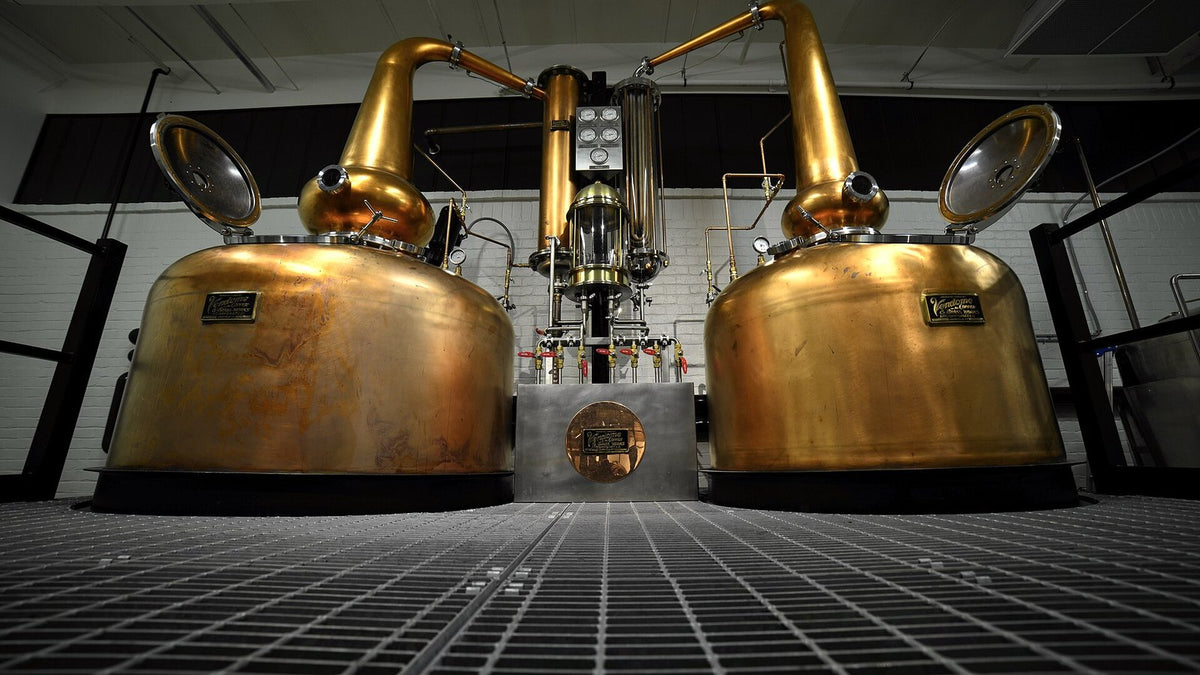
Spirit Academy › Whiskey › American Single Malt
American Single Malt
The newest federal whiskey type: 100 percent malted barley, one U.S. distillery, oak of any kind, official since January 2025.
In one sip
American single malt is what happens when U.S. craft distillers borrow Scotland's grain and keep their own freedom with the barrel. All malted barley, one distillery, but the oak can be new, used, charred or plain. The result ranges from Scotch-like to something closer to a bourbon made of toast. Since January 19, 2025, the name has been a federal standard.
Where it started
Under the federal whisky table, plain "malt whisky" needs only 51 percent malted barley and must go into charred new oak.1 The American Single Malt Whiskey Commission formed to petition for a proper definition, and TTB proposed one in July 2022.3 The final rule was published on December 18, 2024 and became effective January 19, 2025.3 The commission's own framing: for the first time in over 52 years, the U.S. government added a new type of whiskey to its regulations.5 Labels using the old standards may still be used on spirits bottled before January 19, 2030.1
Where and how it's made
The federal standard reads: a fermented mash of 100 percent malted barley, produced in the United States; distilled at 160 proof or less at the same distillery in the United States; stored in used, charred new, or uncharred new oak barrels of 700-liter maximum capacity; stored only in the United States.1 No neutral spirits, no coloring, flavoring or blending materials, with one exception: caramel coloring, and only if disclosed on the label.12 "Straight American single malt whisky" adds a two-year minimum in those barrels.1 As with all whisky, bottling strength is 80 proof or more.1
Compare that with Scotland, where single malt must be distilled in pot stills at a single distillery from water and malted barley, and matured only in Scotland for at least three years.6 The American rule has no minimum age for the base type and no pot-still requirement, and barrel choice is wide open. That is the category's defining freedom: a distiller can age in new charred oak for a bourbon-like richness, in used bourbon barrels for a lighter Scotch-like profile, or in wine casks for something else again.
How to taste it
Treat it like a Scotch for glassware (a tulip) and like a bourbon for expectations (often younger, often louder from new oak). Nose for malt first: toast, cereal, honey. Then ask whether the wood is new (vanilla, coconut, more color) or used (subtler). Water helps the high-proof releases. Pair with roast chicken, aged gouda or a plain butter cookie.
Styles and what the label means
- American single malt whisky — the base type; no minimum age, but under four years an age statement is required.4
- Straight American single malt — two years minimum.1
- Bottled-in-Bond single malt — the federal bond rules apply. bottled-in-bond →
- Cask strength — bottled within two degrees of barrel proof. cask-strength →
- Peated American single malt — barley smoked over peat or local wood. peated-whisky →
- Finished single malt — second maturation in wine, sherry or rum casks. cask-finishes →
Words to know
Tap a term to get asked about it in The Tasting Room.
Start here — craft pours to try
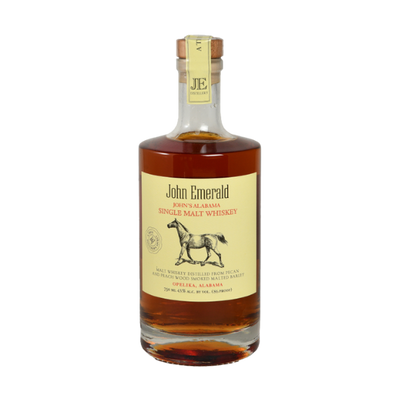
Real bottles from craft makers on Tipxy.
Sources
- 27 CFR 5.143 Whisky (eCFR) accessed 2026-10-12
- 27 CFR 5.72 Coloring materials (eCFR) accessed 2026-10-12
- Federal Register: Addition of American Single Malt Whisky to the Standards of Identity (T.D. TTB-199, Dec 18, 2024) accessed 2026-10-12
- 27 CFR 5.74 Statements of age (eCFR) accessed 2026-10-12
- American Single Malt Whiskey Commission accessed 2026-10-12
- The Scotch Whisky Regulations 2009, reg. 3 accessed 2026-10-12
Photo: Thechadwix, CC BY-SA 4.0, via Wikimedia Commons