


Spirit Academy › Asian Other › Sake
Sake
Japan's brewed rice drink: rice, koji and water, graded by how far the rice is polished, and protected as a GI since 2015.
In one sip
Sake is brewed like beer and drinks like a soft, savory white wine, but it is neither. Three ingredients, rice, koji and water, and a brewer's control over how much of each grain is polished away and how cold the ferment runs, decide whether it comes out rich and rice-forward or light and fruity.
Where it started
The Japan Sake and Shochu Makers Association dates the first record of sake brewing with koji to 715, and a brewing division at the Imperial Court to 689.4 Religious institutions refined the methods by the 13th century, and a 1425 record lists 342 sake-related businesses in Kyoto.4 Pasteurization appears in the record in 1569.4 Sake was first bottled in 1878, sake yeast was identified in 1895, and the National Research Institute of Brewing was founded in 1904.4 A government grading system ran from 1943 to 1992; the current system of categorizing sake by production method took effect in 1990.4
Where and how it's made
Rice is milled, washed, soaked and steamed. Part of it becomes koji: steamed rice dusted with Aspergillus oryzae, whose enzymes break starch into sugar.1 A small starter, the shubo, grows a strong yeast population; the traditional kimoto and yamahai starters build acidity with wild lactic bacteria over about four weeks, while the modern sokujo method adds lactic acid and takes about two.7 The main mash is built in three additions, sandan-jikomi, to keep the yeast ahead of contamination.3 Saccharification and fermentation run at the same time, which is why sake can reach about 20 percent alcohol before water brings it to around 15.3
Brewing needs roughly ten times as much water as rice, and Nada's famous water, miyamizu, is named for Nishinomiya.8 Of roughly 900 rice strains in Japan in 2020, 126 were sake rice; the best known include Yamada-nishiki, Omachi and Gohyakumangoku.18 "Japanese sake" (Nihonshu) has been a geographical indication since December 25, 2015; Hakusan was the first regional sake GI, in 2005.9
How to taste it
Chilled at 8 to 15°C, sake shows a fruity aroma; at room temperature it is subtle and smooth; warmed to 40 to 50°C it turns fuller and more cereal-like.6 Ginjo and namazake are best chilled.5 On the label, a Sake Meter Value below zero suggests sweeter, above zero drier.2 Pairings: sashimi, yakitori, aged cheese with a koshu.
Styles and what the label means
The milling rate is the percentage of the grain left after polishing.2 - Junmai — rice and koji only, no added alcohol; no minimum milling rate.2 - Honjozo — milled to 70 percent or less, with distilled alcohol under 10 percent of the rice weight.2 - Ginjo / Junmai Ginjo — 60 percent or less, cold-fermented for a fruity aroma.2 - Daiginjo / Junmai Daiginjo — 50 percent or less.2 - Namazake — unpasteurized; most sake is pasteurized twice.2 - Genshu — undiluted, usually over 17 percent.3 - Nigori — cloudy, pressed through a coarse mesh.2 - Koshu — sake aged on purpose, usually over a year.2 - Futsu-shu — table sake outside the special designations.3
Words to know
Tap a term to get asked about it in The Tasting Room.
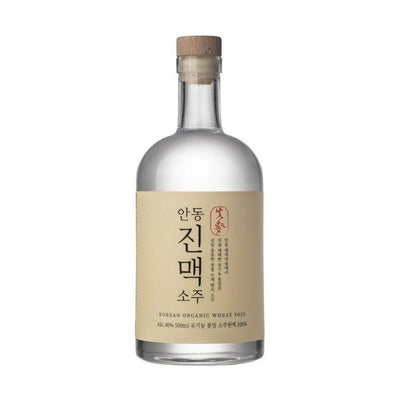
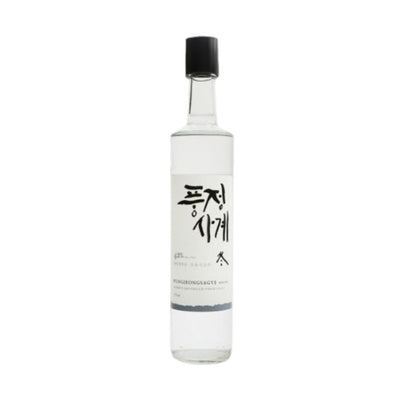
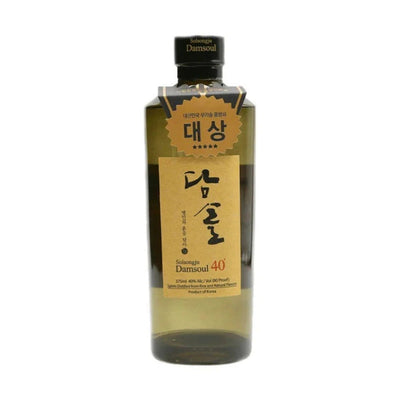
Start here — craft pours to try
Real bottles from craft makers on Tipxy.
Sources
- Japan Sake and Shochu Makers Association — How is Sake Made? accessed 2026-10-12
- Japan Sake and Shochu Makers Association — How to Read Sake Bottle Labels accessed 2026-10-12
- Japan Sake and Shochu Makers Association — Glossary of Sake Terms accessed 2026-10-12
- Japan Sake and Shochu Makers Association — The History of Japanese Sake accessed 2026-10-12
- Japan Sake and Shochu Makers Association — Frequently Asked Questions accessed 2026-10-12
- Japan Sake and Shochu Makers Association — How to Serve Sake accessed 2026-10-12
- Japan Sake and Shochu Makers Association — Sake Brewing Processes and Flavor accessed 2026-10-12
- Japan Sake and Shochu Makers Association — Sake Regionality accessed 2026-10-12
- National Tax Agency (Japan) — Information on GIs protected in Japan accessed 2026-10-12
Photo: Daderot, CC0 1.0, via Wikimedia Commons