


Spirit Academy › Gin Vodka White › Navy Strength Gin
Navy Strength Gin
Gin at about 57 percent, sold on a gunpowder legend. What the number really comes from, what the law says (nothing), and Plymouth's lapsed GI.
In one sip
Navy Strength gin is gin bottled at roughly 57 percent alcohol, well above a standard bottling. The name comes with a great sea story; treat most of it as legend.
Where it started
The popular story: before reliable hydrometers, naval pursers proved a spirit by mixing it with gunpowder and lighting it; if it burned, it was "proof." Difford's tells this explicitly as "legend has it," for rum, before the 1770s.1 A related tale says Navy gin had to be strong so that gunpowder soaked by a spilled cask would still fire.2 Neither has a documentary trail, and you should repeat them as stories.
What is documented is the hydrometer. In 1816 Bartholomew Sikes invented one that put 100 British proof at just over 57 percent alcohol by volume, 57.142857 to be exact, and his scale became law in 1818.1 The UK replaced the Sikes scale with alcohol by volume on January 1, 1980.1 So "Navy Strength" at 57 percent is really 100 degrees of old English proof.1
Even that is muddled. Difford's reports that the Navy's own standard for issued rum was 95.5 on the Sikes scale, 54.5 percent, and says it cannot point to written evidence for how that figure was set.1 By 1850, Coates & Co, makers of Plymouth gin, were supplying more than 1,000 casks of Navy strength gin to the Royal Navy a year.2 Plymouth reintroduced its Navy Strength in 1993.2
Where and how it's made
Legally, Navy Strength is just gin. Neither the U.S. gin standard nor the EU gin categories define the term; they set only minimum strengths, 80 proof in the U.S. and 37.5 percent in the EU.78 Producers make it like any other gin, then cut it with less water. At 57 percent, a bottle reads 114 proof in the U.S., where proof is twice the percentage of alcohol by volume.26
Plymouth matters here because it once had legal protection. Difford's dates Plymouth gin's EU protected status to 2008,3 when Regulation (EC) 110/2008 listed "Plymouth Gin" among its protected names; that regulation repealed the EU's 1989 spirits regulation,10 so an earlier listing is likely. In November 2014 Pernod Ricard, which owns the Plymouth brand and its Blackfriars Distillery, withdrew its support for the GI, saying a GI should represent a collection of brands rather than one, ahead of a February 2015 deadline for each GI's technical dossier.4 Plymouth no longer appears in the EU's eAmbrosia GI register.5 Difford's dates the Black Friars Distillery, where Plymouth is still made, to 1793.9
How to taste it
Nose it carefully at full strength, then add water a few drops at a time and watch the botanicals open up. In drinks, navy gin stands up to lime cordial in a Gimlet and to bitters in a Pink Gin. Pairings: grilled sardines, lime-dressed crab, salted almonds.
Styles and what the label means
- Navy Strength — usually about 57 percent; a marketing term with no legal definition. gin →
- Overproof — any spirit stronger than 100 British proof; Difford's notes the word is used loosely for spirits above about 50 percent.1
- London Dry at navy strength — many navy gins are also London Dry by method. london-dry →
Words to know
Tap a term to get asked about it in The Tasting Room.
Start here — craft pours to try
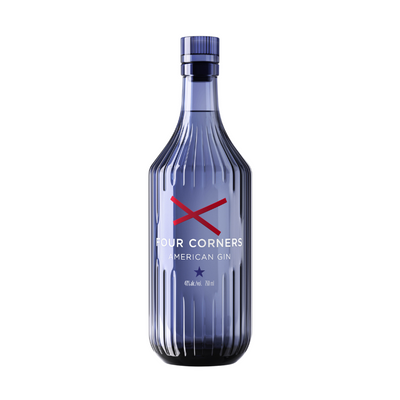
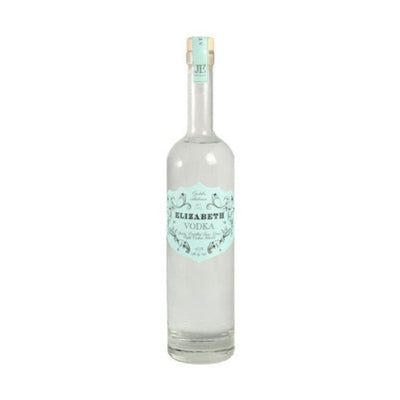
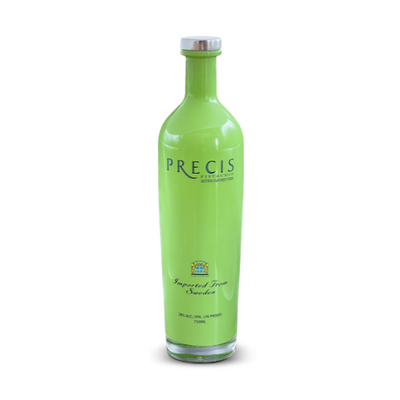
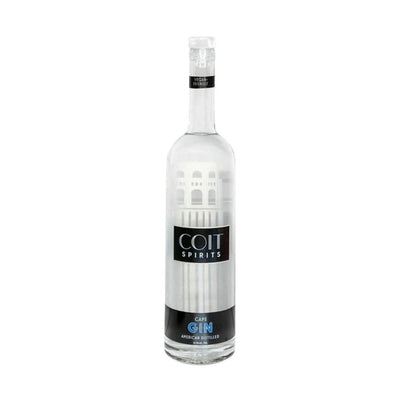
Real bottles from craft makers on Tipxy.
Sources
- Difford's Guide — Overproof & Navy Strength accessed 2026-10-12
- Difford's Guide — Plymouth Gin Navy Strength accessed 2026-10-12
- Difford's Guide — Plymouth gin accessed 2026-10-12
- The Spirits Business — Plymouth Gin to ditch its geographical indication (17 Nov 2014) accessed 2026-10-12
- eAmbrosia GI register — name search for 'Plymouth' (no results) accessed 2026-10-12
- 27 CFR 5.1 Definitions (eCFR) accessed 2026-10-12
- 27 CFR 5.144 Gin (eCFR) accessed 2026-10-12
- Regulation (EU) 2019/787 on spirit drinks, consolidated text, Annex I accessed 2026-10-12
- Difford's Guide — History of gin, 1728–1794 accessed 2026-10-12
- Regulation (EC) No 110/2008, Annex III as adopted (legislation.gov.uk) accessed 2026-10-12
Photo: Michael Chapman, CC BY-SA 4.0, via Wikimedia Commons