

Spirit Academy › Wine › Natural and Orange Wine
Natural and Orange Wine
Low-intervention wine and skin-contact whites: France's Vin Méthode Nature rules, Georgia's qvevri tradition, and the U.S. amber term.
In one sip
Natural wine means wine made with as little intervention as possible, and in most places the term has no legal definition. Orange wine is simpler to pin down: white grapes fermented with their skins, like a red, which gives an amber color and some tannin.
Where it started
UNESCO inscribed the Ancient Georgian traditional Qvevri wine-making method on its Representative List of intangible heritage in 2013.1 For natural wine, France moved first: in March 2020 a charter called Vin Méthode Nature launched with recognition from INAO, the agriculture ministry and the fraud office, as a three-year trial.2
Where and how it's made
Qvevri
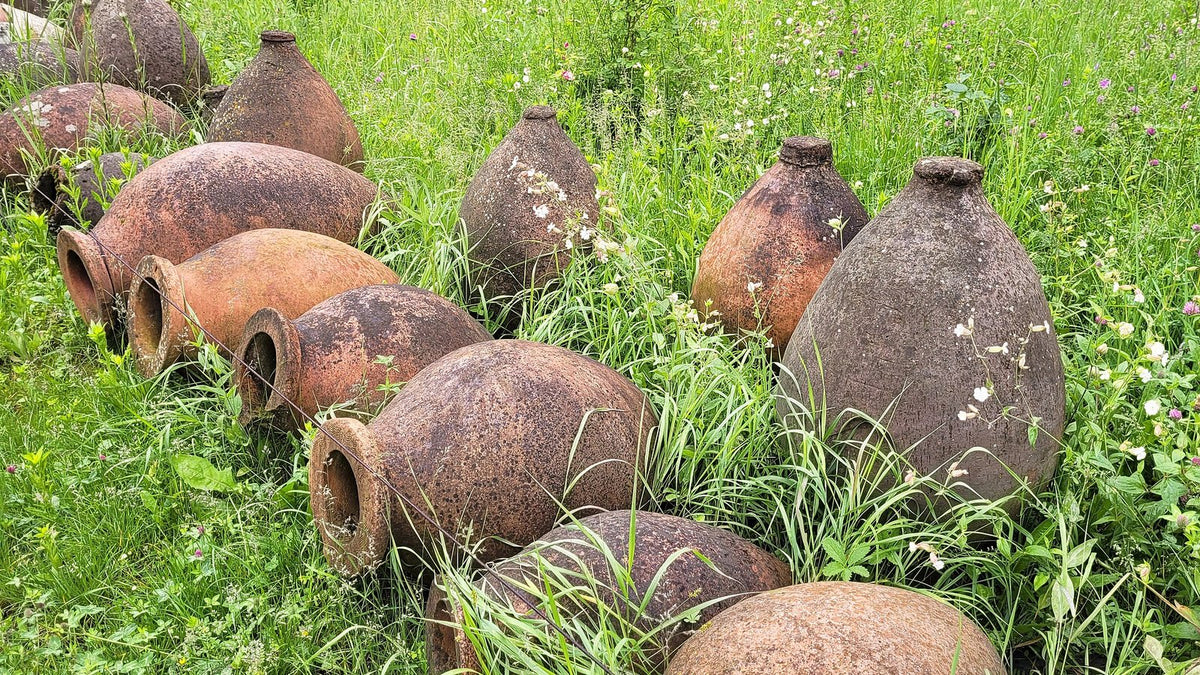
The qvevri is an egg-shaped earthenware vessel. Pressed juice goes in with skins, stalks and pips; the vessel is sealed and buried, and the wine ferments for five to six months.1 Most Georgian farmers and many city dwellers still make wine this way, and wine cellars are considered the holiest place in the family home.1
Vin Méthode Nature
Grapes must come from certified organic vines, be hand-picked and ferment with indigenous yeast.2 Thermovinification, reverse osmosis, flash pasteurisation and cross-flow filtration are banned.2 Up to 30 mg/L of sulfur dioxide may be added after fermentation, none before or during; wines with no addition may say sans sulfites ajoutés.2 Each wine is checked externally.2
In the U.S
Federal standards list amber wine as a color designation alongside red, pink and white.[^cfr4.21]
What the charter does not cover
The Comité Champagne's FAQ says the French AB label guarantees only that grape production is organic, not the cellar work, and that biodynamic wines use Demeter or Biodyvin;3 EU organic wine-making rules, applying since 1 August 2012, do restrict additives and processing aids in the cellar.4 Vin Méthode Nature is narrower: it adds rules about yeast, technique and sulfites on top of organic grapes.2 Many producers make wine in the natural spirit without joining any scheme, so the word on its own tells you about philosophy, not rules. In Georgia, wine and vines run through oral traditions and songs, and qvevri-making knowledge is passed down through families.1
How to taste it
Serve orange wine a little warmer than white, around cellar temperature, in a white wine glass. Expect dried apricot, tea, orange peel and a light grip of tannin. Natural wines can be cloudy and vary bottle to bottle; refrigerate opened bottles. Pairings: roasted squash, lamb with spices, aged cheeses.
Styles and what the label means
- Orange or amber wine — skin-fermented white; U.S. labels may use the color term amber wine.[^cfr4.21]
- Qvevri wine — made in buried clay vessels.1
- Vin Méthode Nature — France's certified natural category.2
- Sans sulfites ajoutés — no added SO2 under that charter.2
- Organic — a separate certification; sources differ on how far it reaches into the cellar.34 wine →
Words to know
Tap a term to get asked about it in The Tasting Room.
Start here — craft pours to try
Real bottles from craft makers on Tipxy.
Sources
- UNESCO Intangible Cultural Heritage — Ancient Georgian traditional Qvevri wine-making method accessed 2026-10-12
- Decanter — Natural wine receives formal recognition in France under the name 'Vin Méthode Nature' accessed 2026-10-12
- Comité Champagne — Frequently asked questions accessed 2026-10-12
- Commission Implementing Regulation (EU) No 203/2012 — detailed rules on organic wine (legislation.gov.uk, as adopted) accessed 2026-10-12
Photo: Bernard Gagnon, CC BY 4.0, via Wikimedia Commons