

Spirit Academy › Agave › Mezcal
Mezcal
Always 100% agave, from any species, mostly from Oaxaca: mezcal's three production categories, six classes and what the label must tell you.
In one sip
Mezcal is the wider world of agave: any species, cooked, fermented and distilled inside its appellation, and always 100 percent agave. Most of it is made in Oaxaca, much of it cooked in earthen pits, which is where the smoke comes from.
Where it started
Mezcal has held an appellation of origin since 1994; the resolution was published on November 28 of that year.21 The current standard, NOM-070-SCFI-2016, was published in the Diario Oficial on February 23, 2017, and sorts mezcal into three production categories.1 It also ended the old blended "Type II" mezcal: producers got four years to keep making it, labeled "MEZCAL 80/20" or "TYPE II MEZCAL."1
Where and how it's made
The appellation covers Oaxaca, Guerrero, San Luis Potosí, Zacatecas and Durango, plus municipalities in Puebla, Michoacán, Tamaulipas and Guanajuato.2 Production is concentrated: Oaxaca made 89.47 percent of certified mezcal in 2025.3 Wild or cultivated agaves are allowed, but they must be mature, registered and geo-referenced, and they travel to the distillery with a maguey guide.1 Espadín (Agave angustifolia) accounted for 84.53 percent of 2025 production; tobalá (Agave potatorum) and cenizo (Agave durangensis) were around 2 percent each.3
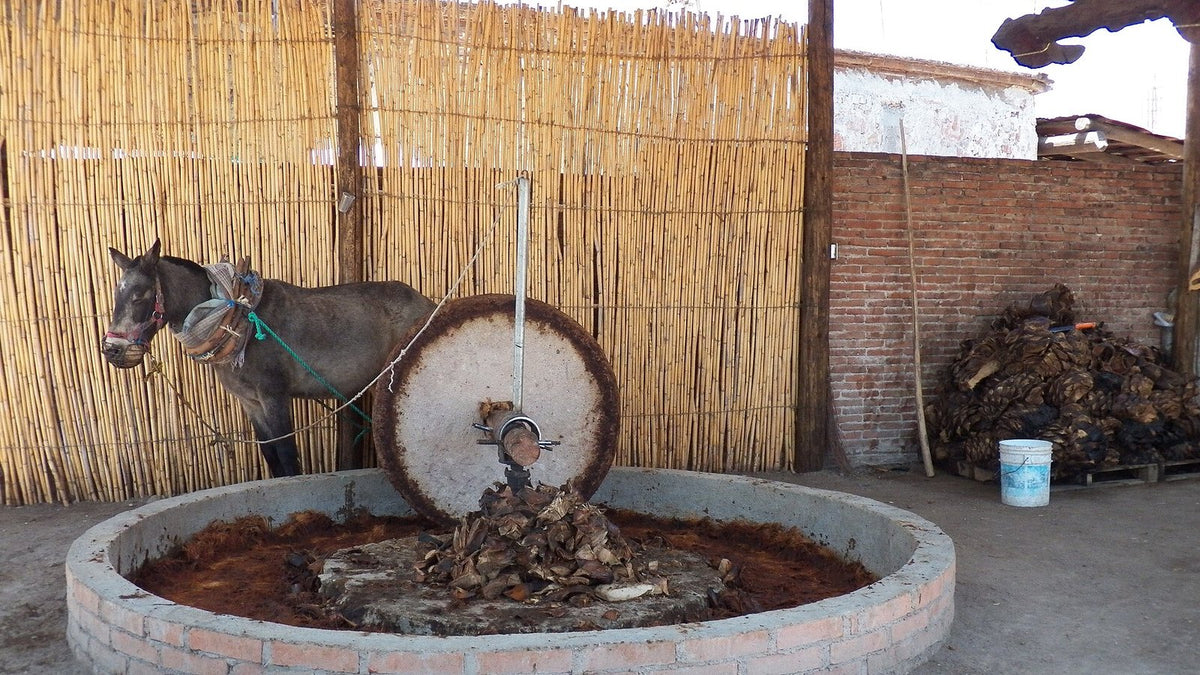
The standard sorts mezcal by how it is made: - Mezcal — cooking in pit ovens, stone ovens or autoclaves; any mill, including a diffuser; column stills allowed.1 - Mezcal Artesanal — pit or raised stone ovens; mallets, tahona or mills; fermentation in stone, wood, clay or animal skins; direct-fire copper or clay pot stills.1 - Mezcal Ancestral — stone-pit cooking, hand or tahona milling, and distillation over direct fire in a clay pot.1
Artesanal is the everyday reality: it made up 91.03 percent of 2025 volume.3 Mezcal must be 35 to 55 percent alcohol by volume.1 In the U.S., mezcal is a type of agave spirit that must be made in Mexico under Mexican law.5
How to taste it
A copita, a veladora candle glass or a small tulip, at room temperature, in small sips. Let the smoke settle and look behind it for fruit, flowers, minerals and green pepper; wild agaves tend to be more herbal and savory than espadín. Pairings: tlayuda, grilled chorizo, orange slices with sal de gusano.
Styles and what the label means
- Blanco o Joven — colorless, no further processing; 95.53 percent of 2025 volume.13
- Madurado en Vidrio — rested more than 12 months in glass.1
- Reposado — 2 to 12 months in wood of any size.1
- Añejo — more than 12 months in wood under 1,000 liters.1
- Abocado con — flavored after distillation, with ingredients such as maguey worm, damiana or mango.1
- Destilado con — redistilled with ingredients; this is where pechuga, made with chicken or turkey breast, lives.1
Every bottle must name the agave species (in descending order if more than one), the state of production and the words PROTECTED DENOMINATION OF ORIGIN.1 Retail bottles may hold no more than 5 liters.1
Words to know
Tap a term to get asked about it in The Tasting Room.
Start here — craft pours to try
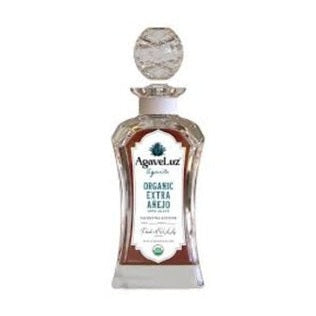
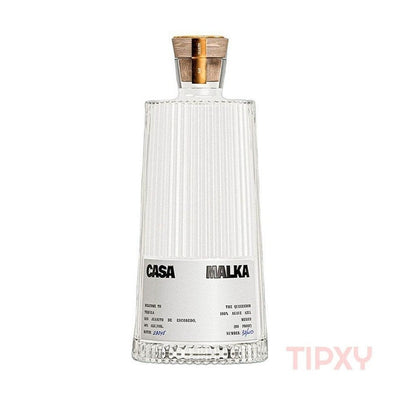
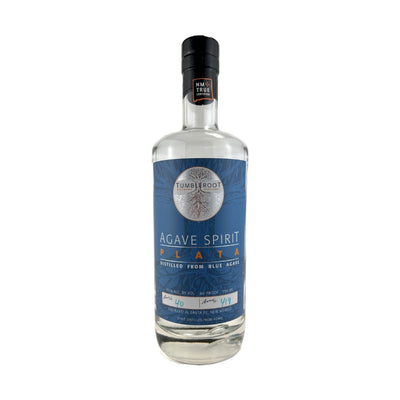
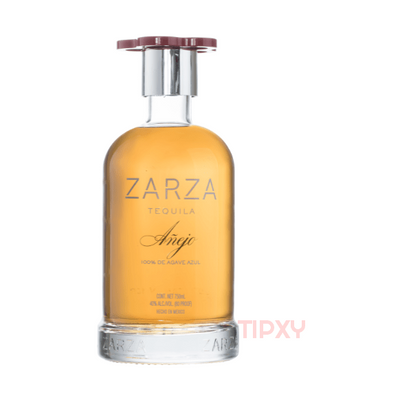
Real bottles from craft makers on Tipxy.
Sources
- NOM-070-SCFI-2016 Alcoholic Beverages — Mezcal — Specifications (English text, COMERCAM) accessed 2026-10-12
- COMERCAM — Denominación de Origen Mezcal accessed 2026-10-12
- COMERCAM — Informe Estadístico 2026 accessed 2026-10-12
- Mezcalistas — Tahona accessed 2026-10-12
- 27 CFR 5.148 Agave spirits (eCFR) accessed 2026-10-12
Photo: Slevinr, CC BY 3.0, via Wikimedia Commons