


Spirit Academy › Whiskey › Bourbon
Bourbon
America's native spirit: at least 51 percent corn, new charred oak, nothing added, and a federal definition since 1964.
In one sip
Bourbon is the sweet, round, vanilla-and-caramel end of the whiskey world, and the reason is the barrel: every drop of it has to go into a brand-new charred oak container. Corn gives the sweetness, the fresh char gives the color and the vanilla, and the law forbids anyone from adding either.
Where it started
Settlers arrived in Harrodsburg with stills in 1774, and Virginia's 1776 Corn Patch and Cabin Rights Act offered 400 acres to anyone who built a cabin and planted corn, which is how corn became the base of the mash bill.4 In 1818 Catherine Carpenter of Casey County recorded the first known sour mash recipe.4 Where the name comes from is contested; the first known reference may date to 1821, and Jacob Spears of Bourbon County may have labeled his product "Bourbon whiskey" in 1840.4 The Bottled-in-Bond Act of 1897 gave honest distillers a federal guarantee.4 Prohibition shut all but six Kentucky distilleries, which survived on medicinal permits; of more than 200 before the 18th Amendment, only 34 reopened.4 On May 4, 1964, Congress recognized bourbon as "a distinctive product of the United States."4
Where and how it's made
The federal standard is short. Bourbon is made from a fermented mash of not less than 51 percent corn, distilled at 160 proof or less, and stored in charred new oak barrels at 125 proof or less.1 Bourbon is the one named-grain whisky for which harmless coloring, flavoring and blending materials are not permitted.1 Like all whisky, it is bottled at not less than 80 proof.1 "Straight" bourbon adds a two-year minimum in those barrels, and anything under four years old must carry an age statement.12 The word "bourbon" may not be used for whisky not distilled and aged in the United States.1
Kentucky adds its own layer: to put "Kentucky" on the label, the bourbon must be cooked, fermented and distilled in Kentucky and aged there at least one year.3 The KDA's own claim is that 95 percent of the world's bourbon is made in the state.7 The process: corn is cooked with water, then rye or wheat is added for flavor; yeast ferments the mash into distiller's beer; it is distilled in a column still and then again in a doubler or pot still; and the new make goes into a new charred white oak barrel.6
How to taste it
A tulip glass or a rocks glass, neat first. Look at the color: lighter amber usually means younger, deeper brown older, though proof and char also play a role.6 Roll a small sip across your tongue, the "Kentucky chew"; the warmth afterward is the "Kentucky hug." Pairings: a grilled pork chop, pecan pie, sharp cheddar.
Styles and what the label means
- Straight bourbon — meets the bourbon rules and spends at least two years in the barrel.5
- Bottled-in-Bond — one distillery, one season, four years in bond, 100 proof. bottled-in-bond →
- Cask strength / barrel proof — bottled within two degrees of the proof it left the barrel. cask-strength →
- Single barrel — drawn from one barrel, not mingled with others. single-barrel →
- Wheated bourbon — wheat replaces rye as the flavoring grain; softer. wheated-bourbon →
- High-rye bourbon — a large rye share in the mash bill; spicier. high-rye-bourbon →
- Small batch — a mingling of select barrels.5
- Finished bourbon — a second cask after maturation (port, sherry, rum). cask-finishes →
Words to know
Tap a term to get asked about it in The Tasting Room.
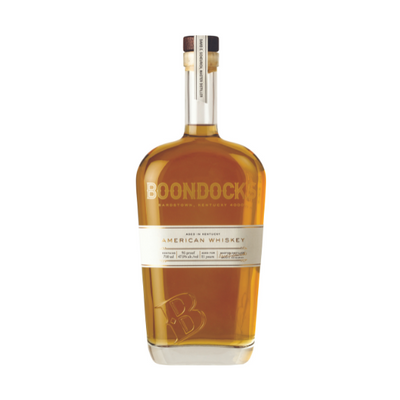
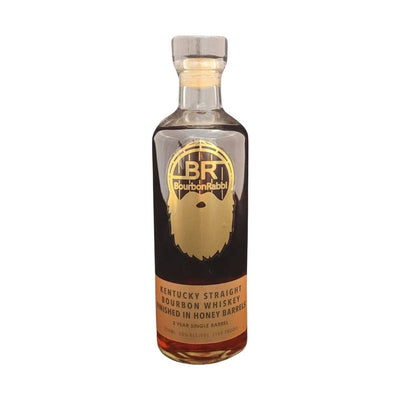
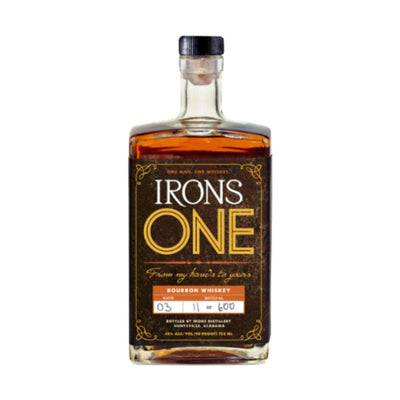
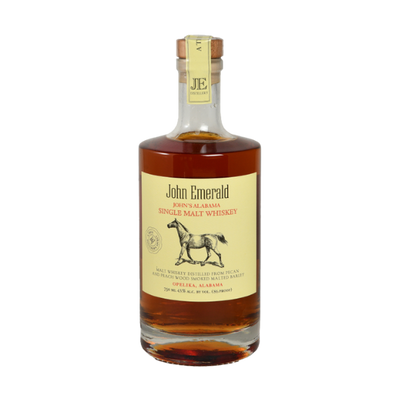
Start here — craft pours to try
Real bottles from craft makers on Tipxy.
Sources
- 27 CFR 5.143 Whisky (eCFR) accessed 2026-10-12
- 27 CFR 5.74 Statements of age (eCFR) accessed 2026-10-12
- Kentucky Distillers' Association — FAQ accessed 2026-10-12
- Kentucky Distillers' Association — Legacy timeline accessed 2026-10-12
- Kentucky Distillers' Association — Glossary accessed 2026-10-12
- Kentucky Distillers' Association — Discover accessed 2026-10-12
- Kentucky Distillers' Association — home accessed 2026-10-12
Photo: Unknown photographer (U.S. National Archives), Public domain, via Wikimedia Commons