


Spirit Academy › Asian Other › Soju
Soju
Korea's clear spirit: pot-distilled from rice since the Goryeo era, diluted into the green bottle in the 20th century, and coming back as craft.
In one sip
Soju is two drinks under one name. One is a traditional spirit pot-distilled from fermented rice, full of grain character. The other, in the small green bottle, is high-strength neutral alcohol diluted to around 20 percent and lightly sweetened. Both are poured with food.
Where it started
Distillation reached Korea during the Goryeo dynasty, brought by the Mongols, and the spirit took the name soju from characters meaning "to burn" and "liquor."3 Mongol encampments in Gaegyeong (Kaesong), Andong and Jeju became centers of distilling, and soju is first documented in about 1375.1 It was precious: one kilogram of rice made only about 400 ml of soju in the Joseon era.3 The Joseon court sent soju as a gift to the lord of Tsushima, and Japanese sake sommeliers believe Joseon techniques shaped Kyushu's barley shochu.3
The 20th century nearly erased it. A 1909 liquor tax law required permission to brew at home, and laws from 1934 through 1995 forbade it.4 After a famine in the 1960s the Korean government banned rice and barley for alcohol, so diluted soju of alcohol, water and sweeteners took over.3 Sources differ on the ban's exact year; the Korea JoongAng Daily dates it to 1965 and its lifting to 1999.6 The 1988 Seoul Olympics started a revival of traditional liquors.3
Where and how it's made
Korea's Liquor Tax Act lists soju among its distilled alcoholic beverages.2 Koreans still split it in two: jeungryusik (distilled) and hiseoksik (diluted) soju.6 Traditional soju starts with nuruk, a grain cake carrying Aspergillus oryzae, mixed with cooked rice, water and yeast and fermented for about twelve days; the filtered liquid is distilled in a soju gori, a gourd-shaped pot still.1 Diluted soju starts as 95 percent column-distilled alcohol from grains or tubers.1
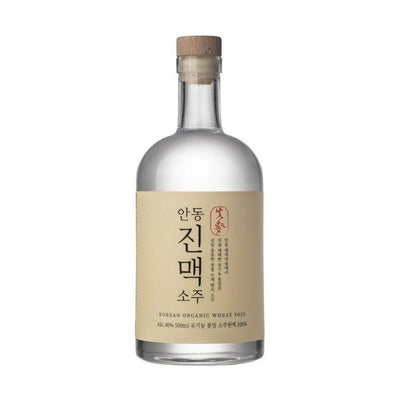
Andong soju is a traditional regional style: a 45-degree spirit from non-glutinous rice and wheat nuruk.5 After the 1962 liquor tax revision banned pure-grain liquor, its recipe survived as the 12th Intangible Cultural Heritage of Gyeongsangbuk-do.5
The green bottle has grown lighter. One flagship brand launched in 1998 at 23 percent, and its lighter version dropped from 16.5 to 16 percent in 2024.7
How to taste it
Traditional soju deserves a small glass, neat, at room temperature or lightly chilled. Look for cooked-rice, pear and nutty notes, and a finish that stays clean. Diluted soju is usually served chilled in small glasses; its lower strength also lets it be sold in U.S. venues licensed only for wine and beer.1 Pairings: Korean barbecue, kimchi pancake, spicy stews.
Styles and what the label means
Words to know
Tap a term to get asked about it in The Tasting Room.
Start here — craft pours to try
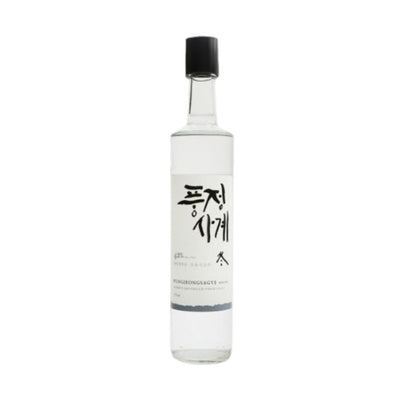
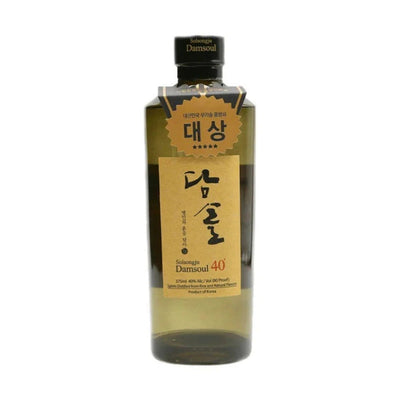
Real bottles from craft makers on Tipxy.
Sources
- The Oxford Companion to Spirits & Cocktails — soju accessed 2026-10-12
- Republic of Korea Liquor Tax Act (KLRI English translation, as amended to Act No. 16125, Dec. 31, 2018) accessed 2026-10-12
- Morning Calm (Korean Air) — A Sip of Korean Heritage, Sep/Oct 2025 accessed 2026-10-12
- Korean Food Promotion Institute (hansik.or.kr) — Makgeolli feature accessed 2026-10-12
- Korean Food Promotion Institute (hansik.or.kr) — Andong Soju feature accessed 2026-10-12
- Korea JoongAng Daily — Moving beyond the green blur: a history of soju accessed 2026-10-12
- Korea JoongAng Daily — Chamisul Fresh soju drops alcohol content to 16 percent (2024) accessed 2026-10-12
Photo: grahamhills (Flickr); Commons author field vandalised, credit taken from FlickreviewR record, CC BY 2.0, via Wikimedia Commons