

Spirit Academy › Wine › Kosher Wine and Mevushal
Kosher Wine and Mevushal
What makes wine kosher, what mevushal means and why it matters for events, and the extra rules for wine from Israel.
In one sip
Kosher wine is made under rabbinic supervision, with every step from crushing to bottling handled by Sabbath-observant Jews. Mevushal wine has also been heated to a set standard, which lets anyone handle it without affecting its kosher status. Kosher is a supervision standard, not a style: it comes in every grape and region.
Where it started
Wine has a central role in Jewish practice, from Shabbat kiddush to the four cups at Pesach.1 OU Kosher explains the two layers of law: yayin nesech, the Biblical prohibition on wine used in idolatrous libation, and stam yaynam, the rabbinic extension to any wine handled by non-Jews.1 Star-K recalls a time when the choice was a few sweet bottles; a later search found over 1,000 kosher wines available in the U.S.2
Where and how it's made
OK Kosher notes that kosher wine must be produced entirely by Shabbat-observant Jews; regular staff may direct but not do the work.3 Star-K supervises four stages: crush, fermentation, aging and bottling.2 From the crush, called hamshacha, only Shomrei Shabbos may handle the wine until it is sealed or made mevushal.2 Non-kosher wineries must kasher their equipment before a kosher run.1
Mevushal
Wine that is mevushal, cooked, can be handled by non-Jews.1 Opinions on the required temperature range from about 165°F to 212°F; OK Kosher requires at least 187°F plus a valve so steam escapes,4 while OU Kosher describes wineries pasteurizing the juice at 190 degrees to render it mevushal.1 Many poskim hold that ordinary closed-system pasteurization does not qualify.4 Most kosher wines are mevushal, but finer wines often are not, because heat affects taste.1
Wine from Israel
Israeli vineyards also follow land-based mitzvot: orla, the ban on fruit from a vine's first three years; terumos u'maaseros; and shvi'is.2 Star-K and other international certifiers do not certify wine from the shemitta crop.2
In the winery
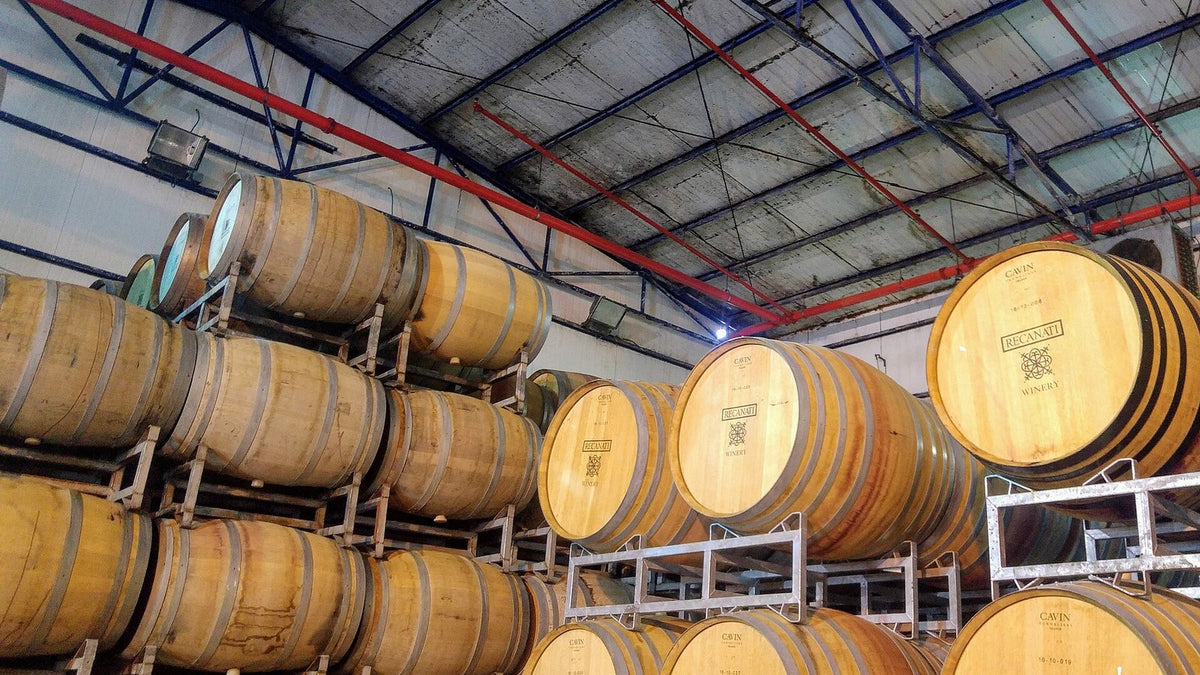
Grapes arrive, are destemmed and crushed, and the juice is pressed off; OU Kosher notes that from this point non-Jews may not operate any machinery, open or shut any valves, or start or stop any pumps.1 Depending on the size of the plant, a kosher run can need from two or three mashgichim to twenty-six.1 For barrel-aged wine, seals must be opened for tasting and topping, which requires supervision each time.2
How to taste it
Taste kosher wine like any other wine of its style. For events with mixed staff, OK Kosher strongly recommends mevushal wine.5 If non-mevushal wine is served, OK Kosher says only Shabbos-observant Jews should open, pour and handle it until the bottle is finished.5
Styles and what the label means
Words to know
Tap a term to get asked about it in The Tasting Room.
Start here — craft pours to try
Real bottles from craft makers on Tipxy.
Sources
- OU Kosher — Uncorking the secrets of kosher wine accessed 2026-10-12
- STAR-K — Kosher wine comes of age accessed 2026-10-12
- OK Kosher — The unique kosher status of grape juice and wine accessed 2026-10-12
- OK Kosher — Say L'Chaim: Mevushal wine accessed 2026-10-12
- OK Kosher — Say L'Chaim: Non-mevushal wine accessed 2026-10-12
Photo: Laliv gal, CC BY-SA 4.0, via Wikimedia Commons