

Spirit Academy › Liqueur Aperitivo › Herbal Liqueurs
Herbal Liqueurs
Chartreuse, Bénédictine, Jägermeister and the other secret-recipe herbals: monastery legends, dated facts and how to drink them.
In one sip
Herbal liqueurs are the deep end of the shelf: dozens of plants, roots, barks and spices in one bottle, usually to a recipe only a few people know. Many come wrapped in monastery stories, and some of those stories are true. They drink as digestifs, as cocktail backbones, and, chilled, as something to sip slowly.
Where it started
Chartreuse
Difford's records that in 1605 Marshal d'Estrées gave the Carthusian monks a manuscript for an "Elixir of Long Life", and that Brother Jérôme Maubec produced the Herbal Elixir of the Grande Chartreuse in 1737.2 The monks' own site dates Green Chartreuse, first sold as "Liqueur de Santé", to 1840, and the registration of the Chartreuse mark to 1852.1 Difford's instead says Brother Antoine created Green Chartreuse two decades after 1737, around the 1750s.2 The Fourvoirie distillery was destroyed by a landslide in 1935.2
Bénédictine
The house says its recipe is "said to" date to 1510 and the monk Dom Bernardo Vincelli at the Abbey of Fécamp.3 The documented part begins in 1863, when merchant Alexandre Le Grand rediscovered the manuscript, and 1864, when he launched the liqueur, its bottle and its trademark.3 The label's D.O.M. stands for Deo Optimo Maximo.4
Jägermeister
Wilhelm Mast bought the Wolfenbüttel premises in 1878 to make vinegar; his son Curt finalised a herbal liqueur recipe in 1934 and launched Jägermeister in 1935, built on 56 natural ingredients.5
Where and how it's made
The method is a mix of maceration and distillation. Green Chartreuse uses 130 plants, flowers, barks, roots and spices: the monks grind the plants, part is distilled for aroma, part is macerated for color, and the liqueur rests in oak vats before bottling at 55 percent.1 Its color is natural, from the plants themselves.1 Chartreuse is made today at the Aiguenoire distillery in Entre-Deux-Guiers.1
The law gives herbals wide room. EU rules list génépi, gentian, mint and aniseed among the plant liqueurs that may only use natural flavorings.6 U.S. rules name Goldwasser as a herb-flavored liqueur containing gold flakes.7
How to taste it
Chill it. The producer suggests Green Chartreuse at 12 to 13 °C or on ice.1 Use a small tulip, take a tiny sip, and let it sit: mint, pine, citrus and pepper unfold in stages. In cocktails a little goes a long way. Pairings: dark chocolate, a cheese board, a slice of lemon tart.
Styles and what the label means
- Monastic herbal — many botanicals, part distilled and part macerated, aged in oak vats; the green original is 55 percent.1
- Plants and spices — local plants enhanced by oriental spices, in the Fécamp abbey tradition.3
- German Kräuterlikör — herbal liqueur; the Wolfenbüttel recipe launched in 1935 uses 56 natural ingredients.5
- Génépi — liqueur flavored with Artemisia genepi, a plant the EU names among plant liqueurs.6
- Goldwasser — herbal liqueur with gold flakes.7
- Amaro — the Italian bitter branch of the family. amaro →
Words to know
Tap a term to get asked about it in The Tasting Room.
Sources
- Chartreuse Diffusion — Green Chartreuse accessed 2026-10-12
- Difford's Guide — Chartreuse Verte (Green Chartreuse) accessed 2026-10-12
- Bénédictine — Heritage accessed 2026-10-12
- Difford's Guide — Distillerie Bénédictine, history accessed 2026-10-12
- Mast-Jägermeister — History fact sheet (2025) accessed 2026-10-12
- Regulation (EU) 2019/787, Annex I, as adopted (legislation.gov.uk archive of EU text) accessed 2026-10-12
- 27 CFR 5.150 Cordials and liqueurs (eCFR) accessed 2026-10-12
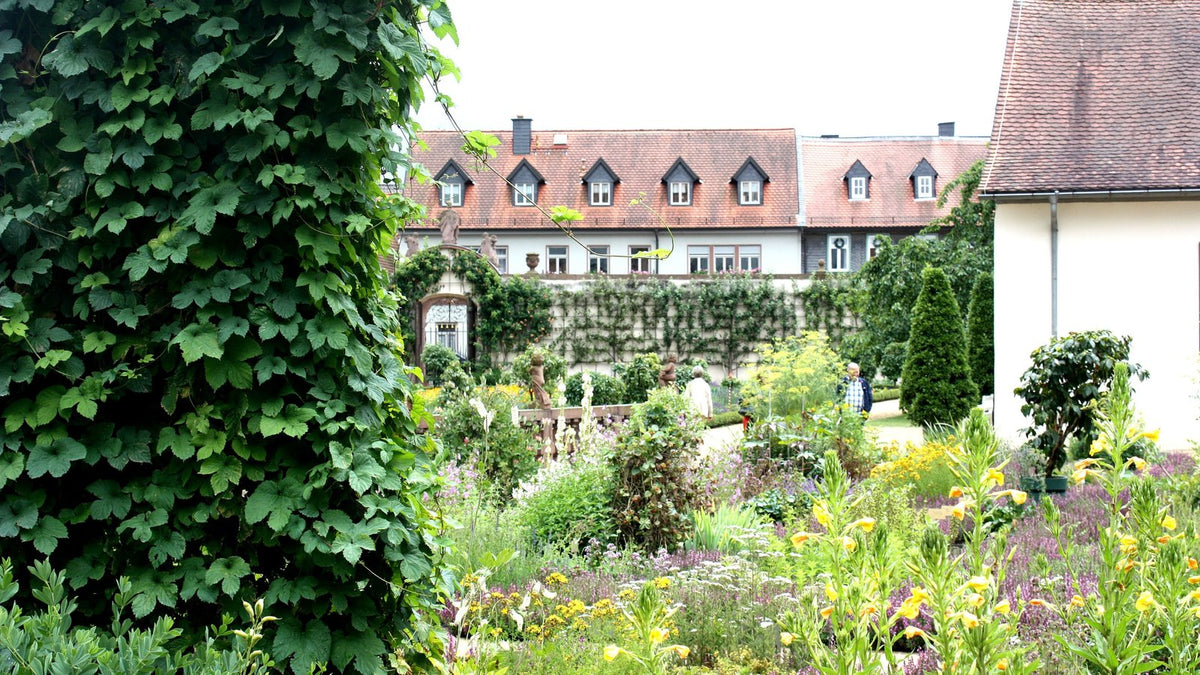
Photo: Dguendel, CC BY 4.0, via Wikimedia Commons