

Spirit Academy › Liqueur Aperitivo › Amaro
Amaro
Italy's bittersweet herbal liqueurs, from soft and citrusy to bracing fernet, and how to read one.
In one sip
Amaro means bitter in Italian, and an amaro is a liqueur that leads with it: roots, barks, herbs and peels steeped in spirit, then sweetened just enough to make the bitterness pleasant. Every house guards its own recipe, so two amari can taste nothing alike. The category runs from soft and orange-scented to the medicinal punch of fernet.
Where it started
Most of the big names began as nineteenth-century recipes sold with bold claims. Bernardino Branca opened the first Fernet production shop in Milan in 1845; early advertising credited a "Dr Fernet" who, Difford's notes, was fictitious, dreamed up for marketing.2 In Sicily, the Averna story says a Benedictine monk gave Salvatore Averna the recipe in 1868 as thanks for his work in the community, a tale the trade press reports as legend.4 Stanislao Cobianchi founded his distillery in Bologna in 1885 and settled on 40 botanicals; the drink was renamed Amaro Montenegro after Princess Elena of Montenegro, who married the future King Victor Emmanuel III in 1896.3 Treat the founding legends as stories: the dates of the firms are better documented than the monks.
Where and how it's made
The EU spirit-drink categories have no entry called "amaro"; most amari are liqueurs, which need at least 15 percent alcohol and 100 grams of sweetening per litre, except that liqueurs flavored only with gentian or wormwood may stop at 80 grams.1 A drier product can instead be sold as a "bitter-tasting spirit drink", also a 15 percent minimum, whose taste must be predominantly bitter.1
The method is maceration: botanicals soak in neutral spirit, sometimes alongside distillation of part of the blend, then the infusion is sweetened, cut with water and often rested. Alcohol ranges widely. Cynar, built on artichoke leaves plus 12 other botanicals, sits at 16.5 percent.5 Fernet-Branca, by contrast, is listed at 40 percent by Australian Bartender.6
Geography gives a rough guide. Alpine amari from the north lean on mountain botanicals; the south tends toward citrus.6 Fernets are a sub-style: more medicinal and usually higher in alcohol than other amari.6
How to taste it
Pour 1 to 1.5 ounces into a small tulip or a rocks glass, neat or over one large cube; a twist of orange suits most. Taste first for sweetness, then let the bitterness build on the finish. Lighter amari take soda well. Pairings: espresso, dark chocolate, a plate of biscotti.
Styles and what the label means
- Fernet — bracingly bitter, more medicinal and usually stronger than other amari.6
- Alpine (alpino) — northern, built on alpine botanicals such as gentian, juniper, wormwood and yarrow.6
- Southern / citrus — rounder, orange and lemon peel forward, as in Sicilian amari.4
- Carciofo — artichoke-based, like Cynar; vegetal and bittersweet.5
- Aperitivo bitters — the lighter, brighter red and orange cousins. aperitivo-bitter-liqueurs →
- "Bitter" on an EU label — a bitter-tasting spirit drink of at least 15 percent.1
Words to know
Tap a term to get asked about it in The Tasting Room.
Sources
- Regulation (EU) 2019/787, Annex I, as adopted (legislation.gov.uk archive of EU text) accessed 2026-10-12
- Difford's Guide — Fratelli Branca Distillerie, history accessed 2026-10-12
- Difford's Guide — Story of Amaro Montenegro accessed 2026-10-12
- The Spirits Business — Averna marks 150th anniversary (2018) accessed 2026-10-12
- Difford's Guide — Cynar accessed 2026-10-12
- Australian Bartender — A handy introduction to amaro (2017) accessed 2026-10-12
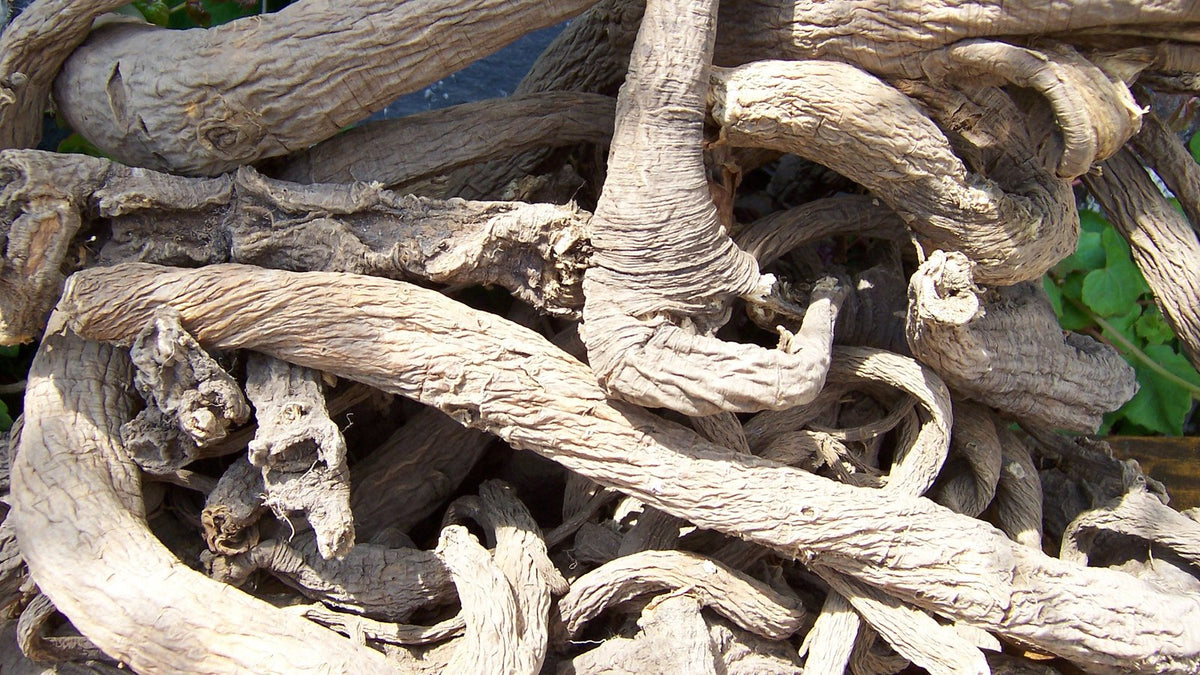
Photo: B.navez, CC BY-SA 3.0, via Wikimedia Commons