

Spirit Academy › Cane › Cachaça
Cachaça
Brazil's cane-juice spirit, 38 to 48 percent alcohol by law, aged in oak or native woods like amburana, and the base of the caipirinha.
In one sip
Cachaça is Brazil's sugar cane spirit, distilled from fermented fresh cane juice rather than molasses. Unaged, it is grassy, fruity and a little funky; aged, it can taste of vanilla and toast from oak or of cinnamon and spice from native Brazilian woods. It is also the only legal base for a Brazilian caipirinha.
Where it started
The Instituto Brasileiro da Cachaça (IBRAC) dates the first deliberate distillation of cachaça to a coastal sugar mill between 1516 and 1532, which would make it Latin America's first distilled spirit, ahead of pisco, tequila and rum.8 A 2001 decree made "cachaça" a geographical indication, a word "of Brazilian origin and use," and restricted the name to producers established in Brazil.2 The United States and Brazil signed an agreement on April 9, 2012 that led TTB to recognize cachaça as a distinctive product of Brazil.7 A 2019 MAPA report counted 951 registered cachaça producers at the end of 2018, led by Minas Gerais.5
Where and how it's made
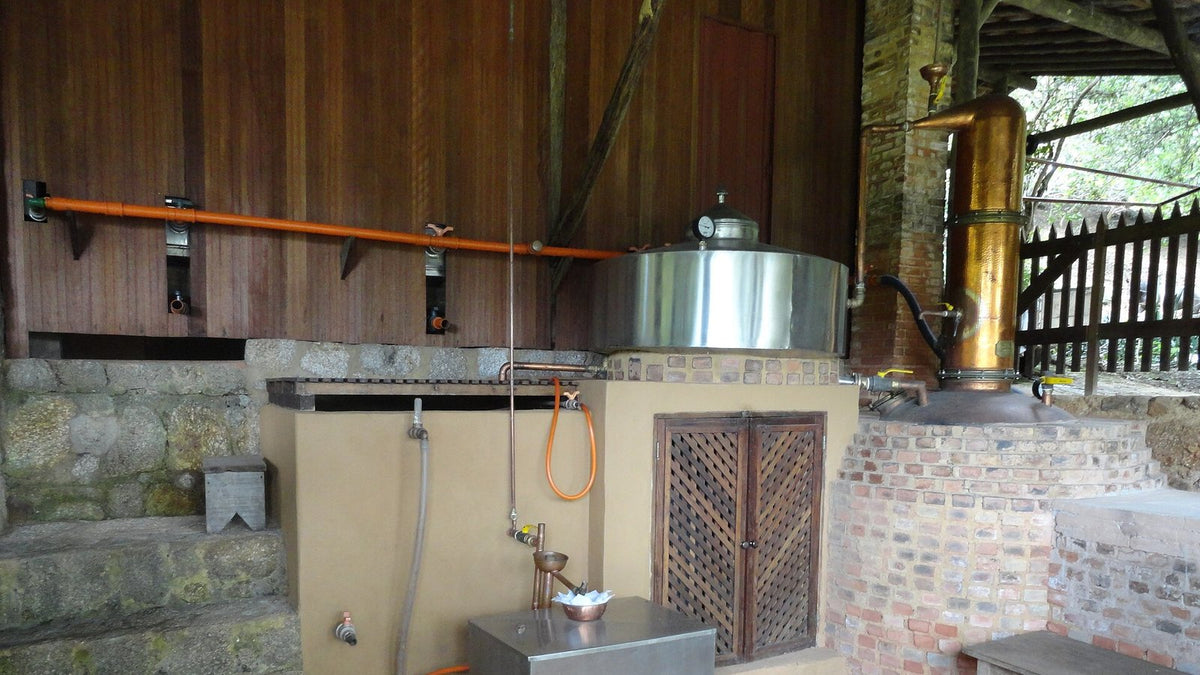
Brazilian law today defines cachaça as the typical and exclusive name for cane aguardente produced in Brazil, at 38 to 48 percent alcohol at 20°C.1 The broader category, aguardente de cana, runs from 38 to 54 percent.1 "Cachaça de alambique" must be distilled from raw cane juice wholly in copper pot stills.1
Aging rules were rewritten by MAPA Portaria 539 of 2022, in force from February 1, 2023. According to MAPA's announcement, as reprinted by Notícias Agrícolas, envelhecida (aged) cachaça must have at least half its volume aged one year in wood containers of no more than 700 liters; Premium is entirely aged for one year, and Extra Premium for at least three years.3 Armazenada (stored) cachaça has spent time in wood without meeting the aging criteria.34 Contact with wood fragments is permitted but cannot be called aging.34 MAPA also allows the traditional label words Ouro (gold), Prata (silver), Clássica and Tradicional, while terms such as artesanal, colonial, caseiro and natural are banned unless a federal law provides for them.4
In the U.S., cachaça is a type of rum and may be spelled with or without the cedilla.6 It still has to meet the U.S. rum floor of 40 percent, so lower-strength Brazilian bottlings cannot be sold here as cachaça.7
How to taste it
Taste a prata neat in a small glass, then in a caipirinha. Brazil defines the drink as cachaça with lime and sugar at 15 to 36 percent alcohol.1 For aged cachaça, IBRAC says amburana gives intense color with fruity, spicy, slightly sweet notes, while white jequitibá adds almost no flavor or color.9 Pairings: feijoada, pão de queijo, grilled picanha.
Styles and what the label means
- Prata / clássica — a traditional label term MAPA still allows;4 under the revoked 2005 rules it meant colorless cachaça.5
- Ouro — gold, likewise an allowed label term;4 the 2005 rules tied it to color from wood.5
- Envelhecida — at least 50 percent aged one year in wood up to 700 liters.3
- Premium / Extra Premium — 100 percent aged one year / three years.3
- Cachaça de alambique — copper pot-still cachaça.1
- Native-wood cachaça — amburana, jequitibá, bálsamo and others.9
Words to know
Tap a term to get asked about it in The Tasting Room.
Start here — craft pours to try
Real bottles from craft makers on Tipxy.


Sources
- Brazil, Decreto nº 12.709 de 31 de outubro de 2025 (Planalto) accessed 2026-10-12
- Brazil, Decreto nº 4.062 de 21 de dezembro de 2001 (Planalto) accessed 2026-10-12
- Notícias Agrícolas / MAPA — Mapa publica padrão de identidade e qualidade da aguardente e da cachaça (Portaria 539/2022) accessed 2026-10-12
- MAPA — FAQ Portaria MAPA nº 539/2022 (aguardente de cana e cachaça) accessed 2026-10-12
- MAPA — A Cachaça no Brasil: dados de registro (2019) accessed 2026-10-12
- 27 CFR 5.147 Rum (eCFR) accessed 2026-10-12
- TTB T.D. — Amendment to the Standards of Identity for Distilled Spirits (Cachaça), 78 FR 12623 (govinfo) accessed 2026-10-12
- Instituto Brasileiro da Cachaça — História da Cachaça accessed 2026-10-12
- Instituto Brasileiro da Cachaça — Cachaça e Madeiras accessed 2026-10-12
Photo: Adrian Michael, CC BY-SA 3.0, via Wikimedia Commons