

Spirit Academy › Brandy › American Brandy
American Brandy
What brandy means on a U.S. label: grape brandy by default, applejack for apples, immature under two years, and fruit named on the front.
In one sip
American brandy is defined less by a region than by a rulebook. Federal regulations set out what "brandy" means, which fruit names go on the label, when an age statement is required and which foreign names are off-limits to U.S. producers. Learn those rules and a U.S. brandy label tells you most of what is in the bottle.
Where it started
Apples came before grapes. The Laird family, whose company still makes applejack, says William Laird settled in Monmouth County, New Jersey, by 1698 and distilled apples instead of grain.4 The family also says it supplied applejack to George Washington's troops at the Battle of Monmouth in 1778, and that it reopened in 1933 under a permit to distill apple brandy for medicinal purposes.4
Where and how it's made
The federal class is broad: brandy is distilled from the fermented juice, mash or wine of fruit, or the residue, at less than 95 percent alcohol (190 proof), and bottled at not less than 80 proof.1 Within that class sit the working types: - Fruit brandy — from whole, sound, ripe fruit or fruit wine; up to 20 percent pomace by weight or 30 percent lees by volume may be added.1 - Grape brandy — fruit brandy from grapes, stored at least two years in oak; it may be labeled simply "brandy."1 - Other single fruits — named on the label, as in "peach brandy."1 - Dried fruit brandy — from dried fruit; raisin brandy is the grape version.1 - Lees, pomace and residue brandy — from what is left after winemaking.1 - Neutral brandy — distilled above 85 percent alcohol (170 proof).1
Wood is not required for every type, but it changes the name. Grape brandy stored in oak for fewer than two years must be called "immature brandy."1 An age statement is otherwise optional; the rule that requires one on brandy with under two years in oak exempts immature, fruit, marc, pomace, Pisco, Singani and grappa brandies, which are not customarily stored in oak.3 Any age you state may be understated but never overstated.3
How to taste it
A tulip glass, neat, then with one ice cube. Read the label first: a bottle labeled plain "brandy" or "grape brandy" has had at least two years in oak, because younger grape brandy must be called "immature brandy."1 Pairings: roast pork with apples, sharp Cheddar, pecan pie.
Styles and what the label means
- Applejack — the legal alternative name for apple brandy.1
- Blended applejack — at least 20 percent apple brandy aged two years in oak, the rest up to 80 percent neutral spirits.2
- Kirschwasser / Slivovitz — allowed names for cherry and plum brandy. eau-de-vie-fruit-brandy →
- Grappa — an allowed name for grape pomace brandy. grappa-and-marc →
- Off-limits names — Cognac, Armagnac, Calvados and Brandy de Jerez must come from those countries under their own laws.1
- Pisco and Singani — recognized only from Peru or Chile, and from Bolivia.1 pisco →
Because the United States does not protect geographical indications as such, Cognac is protected there as a certification mark; the BNIC calls the U.S. Cognac's largest export market.5
Words to know
Tap a term to get asked about it in The Tasting Room.
Start here — craft pours to try
Real bottles from craft makers on Tipxy.

Sources
- 27 CFR 5.145 Brandy (eCFR) accessed 2026-10-12
- 27 CFR 5.146 Blended applejack (eCFR) accessed 2026-10-12
- 27 CFR 5.74 Statements of age, storage, and percentage (eCFR) accessed 2026-10-12
- Laird & Company — History accessed 2026-10-12
- BNIC — A major legal breakthrough in the United States to better protect Cognac (28 Aug 2024) accessed 2026-10-12
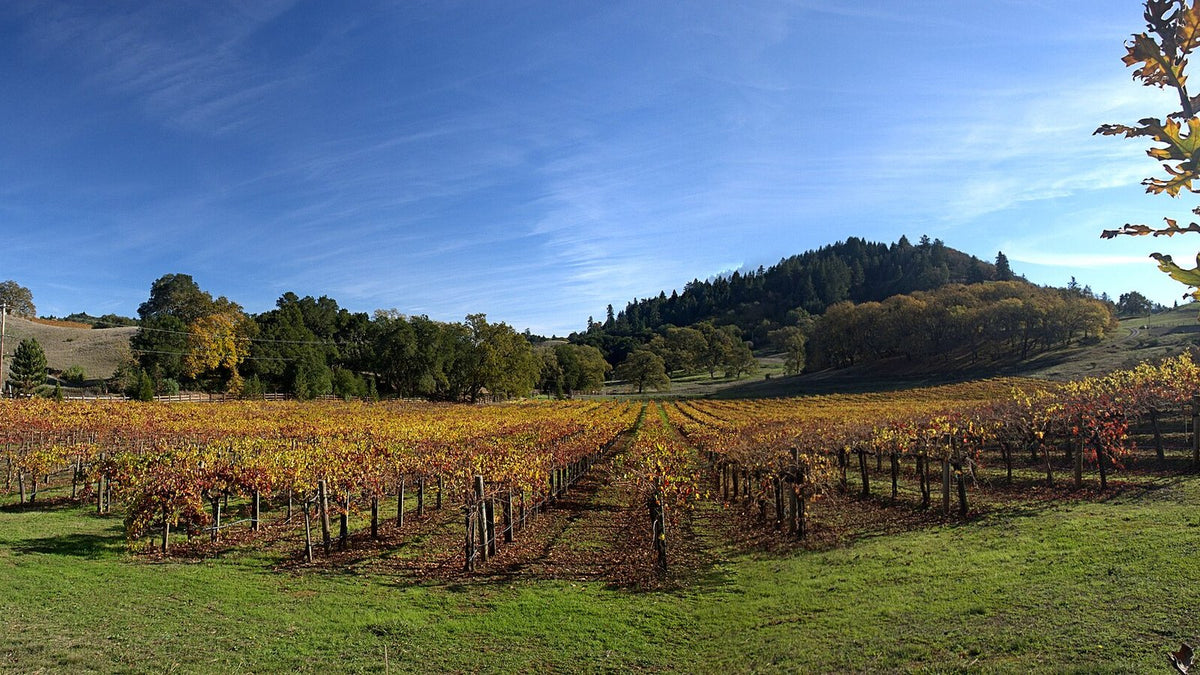
Photo: Doug, CC BY 2.0, via Wikimedia Commons