

Spirit Academy › Liqueur Aperitivo › Vermouth and Aromatised Wine
Vermouth and Aromatised Wine
Wine, wormwood and a little spirit: how vermouth is defined in the EU and U.S., what Vermouth di Torino means, and how to keep it fresh.
In one sip
Vermouth is wine, flavored with botanicals and fortified with a little spirit; wormwood is the herb that gives it its name and its bitter edge. It is the second ingredient in the Manhattan, the Martini and the Negroni, and a fine drink on its own over ice. Because it is wine, it goes stale once opened.
Where it started
Wormwood wines are ancient, but the commercial category starts in Turin. In 1786 Antonio Benedetto Carpano created the first commercial vermouth brand in a shop on today's Piazza Castello.6 Carpano's own history says he combined herbs and spices with muscatel and sent a crate to King Vittorio Amedeo III.8 The word comes from the German wermut, wormwood.5
France built the dry side. In 1813 Joseph Noilly began flavoring Languedoc white wines in Marseille, creating the dry style now sold as Noilly Prat, and in 1821 Joseph Chavasse made a vermouth in Chambéry that became Dolin.6 Old cocktail books call for "French" (dry) and "Italian" (sweet) vermouth for that reason.6
Where and how it's made
EU
Vermouth is an aromatised wine to which alcohol has been added and whose characteristic taste comes from Artemisia species.3 An aromatised wine must be at least 75 percent wine by volume, with an actual strength of 14.5 to under 22 percent.1 The EU requires wormwood but sets neither the species nor a minimum quantity.5 Sweetness terms are defined: extra-dry under 30 grams of sugar per litre, dry under 50, semi-dry 50 to under 90, semi-sweet 90 to under 130, sweet 130 or more.2
United States
Vermouth is a type of aperitif wine, compounded from grape wine with the taste, aroma and characteristics generally attributed to vermouth; aperitif wine must be at least 15 percent alcohol.4 There is no wormwood requirement.5
Vermouth di Torino
The name has been protected as a geographical designation since 1991; a 2017 ministerial decree then set its production rules.5 It must be made in Piedmont from Italian wine, flavored with Artemisia absinthium and/or pontica grown or gathered in Piedmont, colored only with caramel, and bottled at 16 to 22 percent.7 "Superiore" requires at least 17 percent and at least 50 percent Piedmont wine.7
Other aromatised wines
EU law also names quinquina wine (quinine-flavored), bitter vino (gentian) and Americano (wormwood and gentian).3 Kina Lillet, first made in 1887 by the Lillet brothers, is the quinquina the James Bond Vesper calls for; the 1986 relaunch dropped "Kina" and reduced the quinine.9
How to taste it
Serve it cold, over ice with a twist, or with soda. After opening, close it and keep it in the fridge; it is wine, so it fades once open. Look for the balance of sugar against the bitter wormwood. Pairings: salted almonds, olives, a plate of salumi.
Styles and what the label means
- Rosso / sweet — Turin's red, sweet style, for the Manhattan and Negroni.6
- Dry / extra dry — pale, under 50 or under 30 g/l sugar in the EU.2
- Bianco / blanc — pale and sweet; Dolin's Blanc dates to 1881.6
- Vermouth di Torino — the Piedmont GI.7
- Quinquina / Americano — quinine and gentian aromatised wines.3
Words to know
Tap a term to get asked about it in The Tasting Room.
Sources
- Regulation (EU) No 251/2014, Article 3, as adopted accessed 2026-10-12
- Regulation (EU) No 251/2014, Article 6, as adopted accessed 2026-10-12
- Regulation (EU) No 251/2014, Annex II, as adopted accessed 2026-10-12
- 27 CFR 4.21 The standards of identity (wine) (eCFR) accessed 2026-10-12
- Difford's Guide — What is vermouth: definition and rules accessed 2026-10-12
- Difford's Guide — History of vermouth accessed 2026-10-12
- Australian Bartender — What the Vermouth di Torino GI means (2017) accessed 2026-10-12
- Carpano — The History accessed 2026-10-12
- Difford's Guide — Lillet, history accessed 2026-10-12
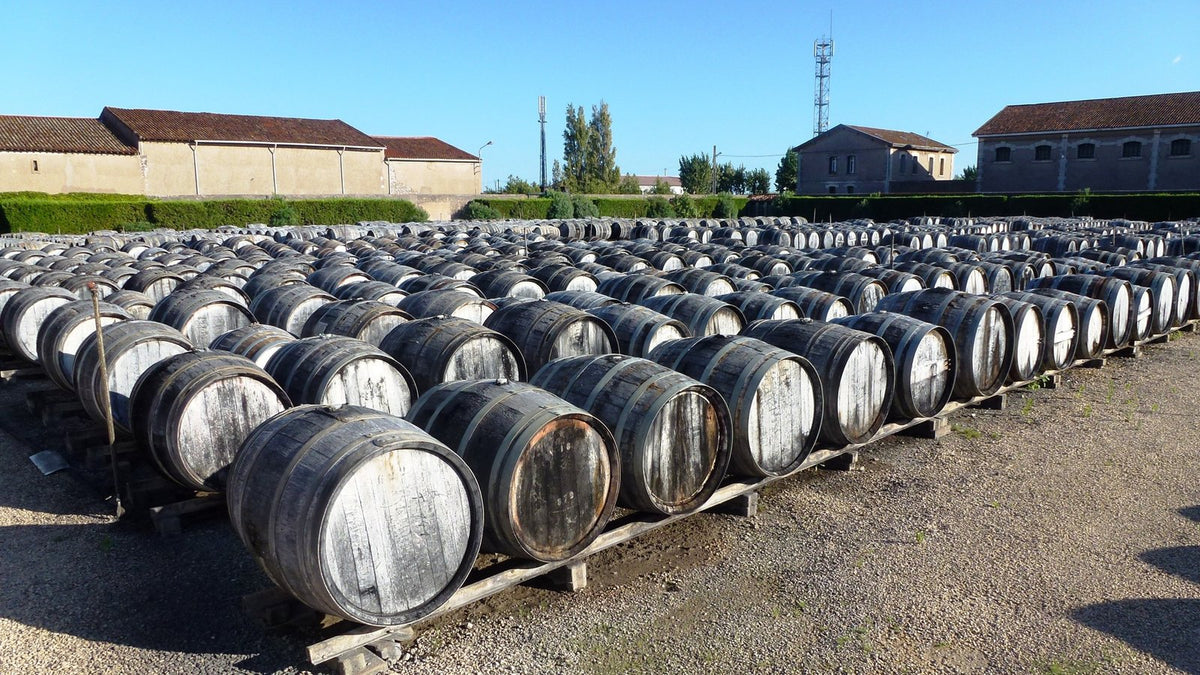
Photo: RudolfSimon, CC BY-SA 3.0, via Wikimedia Commons