

Spirit Academy › Wine › Rosé Wine
Rosé Wine
Pink wine from brief skin contact, direct press or saignée, with Provence as the reference: methods, grapes and serving.
In one sip
Rosé is made from black grapes whose skins touch the juice only briefly, giving color without much tannin. It is not a mix of red and white wine, with one notable exception in Champagne.
Where it started
When Greek settlers founded Marseille about 2,600 years ago they brought the vine to France, and early wine there was pale because long maceration was uncommon.12 Provence's appellations followed much later: Côtes de Provence in 1977, Coteaux d'Aix-en-Provence in 1985 and Coteaux Varois in 1993.1
Where and how it's made
Only black grape skins contain pigment, so color depends on how long and how warm the skin contact is.3 Provence uses two main methods: - Skin maceration — crushed grapes sit 2 to 20 hours at 16 to 20°C, then are pressed and fermented cool for about a week.3 - Direct press — whole or destemmed bunches are pressed slowly, giving paler wine.3 - Saignée, used in other regions, bleeds off about 5 to 15 percent of the juice from a red-wine tank.3
Champagne is the exception: blended rosé adds still red Champagne wine to white base wine.4 In the U.S., White Zinfandel is a blush wine made from red Zinfandel.5
Provence devotes 91 percent of its vines to rosé.2 Main grapes include Cinsault, Grenache, Mourvèdre, Syrah and the local Tibouren; Cinsault is widely used for rosé and adds a fresh, delicate, fruity touch.6 Côtes de Provence covers over 20,000 hectares in 84 communes.6
Rosé is also a big business. Provence produced 134 million AOP bottles in 2024.2 It makes 40 to 45 percent of France's AOP rosé and around 5 percent of the world's rosé, and exports more than 55 million bottles a year, about 37 percent of them to the United States.2 In France one in three bottles of wine bought is rosé, and consumption roughly tripled in 25 years from 1990.2 Provence's colour chart names six main shades of AOP rosé; it was developed with the region's rosé research center, founded in Vidauban in 1999.2 In 2008 the CIVP launched the Observatoire du Rosé with FranceAgriMer, CNIV and the OIV to track the market.2
How to taste it
Chill it well and use a white wine glass. Color tells you method more than quality: direct press is paler than skin maceration.3 Smell for strawberry, citrus peel and herbs. Pairings: salade niçoise, grilled shrimp, aioli.
Styles and what the label means
Words to know
Tap a term to get asked about it in The Tasting Room.
Start here — craft pours to try
Real bottles from craft makers on Tipxy.
Sources
- Vins de Provence (CIVP) — History accessed 2026-10-12
- Vins de Provence (CIVP) — Intro to rosé accessed 2026-10-12
- Vins de Provence (CIVP) — Elaboration of rosé accessed 2026-10-12
- Comité Champagne — Grape varieties accessed 2026-10-12
- Wine Institute — Zinfandel fact sheet accessed 2026-10-12
- Vins de Provence (CIVP) — Côtes de Provence accessed 2026-10-12
- Vins de Loire (InterLoire) — Grape varieties accessed 2026-10-12
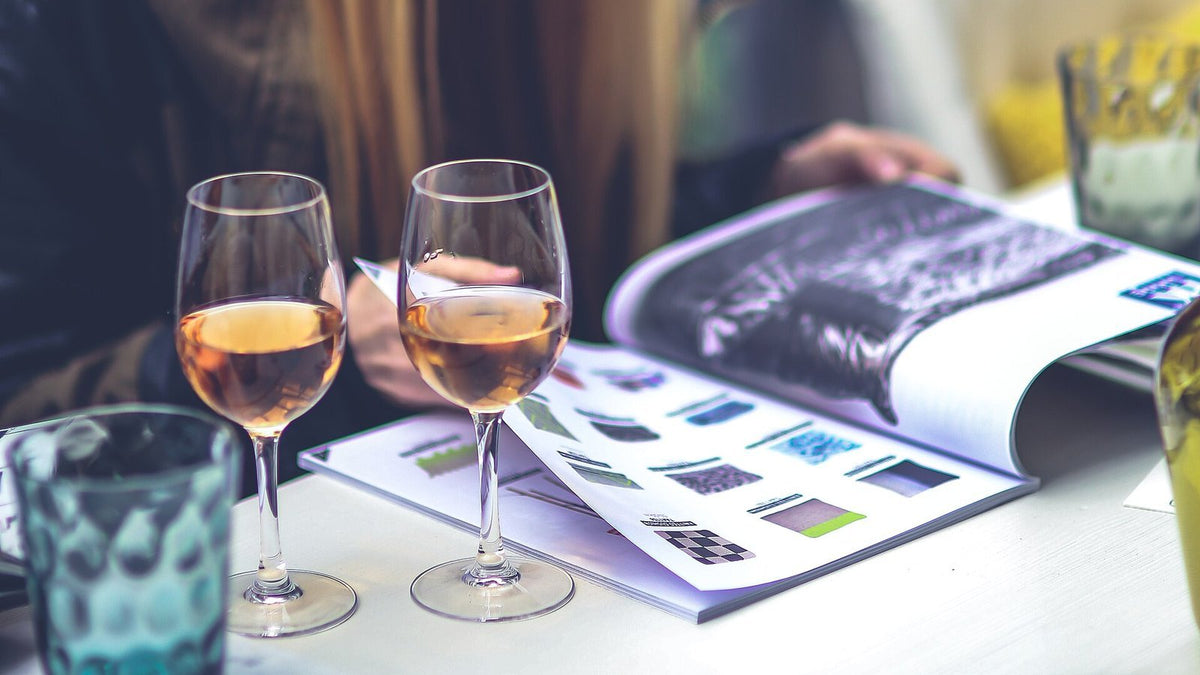
Photo: Karolina Grabowska, CC0, via Wikimedia Commons