

Spirit Academy › Liqueur Aperitivo › Orange Liqueurs
Orange Liqueurs
Triple sec and curaçao: where orange liqueur came from, what the label terms mean, and why every bar keeps one.
In one sip
Orange liqueur is the sweet, zesty middle of the Margarita, the Sidecar and the Cosmopolitan, and is more usually mixed than sipped neat. Two families share the shelf. Curaçao, the older Dutch style, is usually colored and often spiced; triple sec, the French style, is clear and sharply orange.
Where it started
The Dutch came first. Difford's credits the Dutch, with their East and West India trading companies, with first redistilling dried orange peels shipped from islands such as Curaçao, which is why Dutch curaçaos predate French triple secs by a couple of hundred years.2 The original island fruit was the Laraha orange, a mutated Valencia.2
Triple sec is a French nineteenth-century idea. Combier claims Jean-Baptiste Combier made the first in 1834 in Saumur.2 Cointreau followed in 1875, when Edouard Cointreau took over the Angers distillery his father had founded with his uncle in 1849.2 Cointreau was originally labeled "Curaçao Triple Sec Cointreau", and dropped "triple sec" from its labels sometime between the wars.2 Even the name is disputed: "sec" means dry, and "triple" may refer to triple distillation or, by Cointreau's account, to three types of peel.2
Where and how it's made
U.S. rules treat "Triple Sec" and "Curacao" as type names for orange-flavored liqueurs, and let curaçao carry its color on the label, as in Blue Curacao.1 As liqueurs they must carry at least 2.5 percent sugar by weight.1 In the EU, citrus liqueurs fall in the group that may only be flavored with natural flavorings and flavoring foodstuffs, and an "orange brandy" compound name is permitted for liqueurs made in the Union.3
Classic triple sec starts from neutral spirit, usually from sugar beet. Dried orange peel steeps in the spirit and is redistilled; the concentrated orange spirit is then blended with more neutral spirit, water and sugar.2 Strength runs widely, typically 20 to 40 percent, with better examples near 38 to 42.2 Curaçaos usually add herbs and spices, particularly coriander, and are orange or even blue in color.2
Some orange liqueurs use a brandy base instead of neutral spirit, which gives a rounder, oak-and-caramel style.
How to taste it
Pour a little neat at cellar temperature, then a little over ice. Smell for bitter peel against sweet juice. The lingering sweetness tells you how much sugar you are adding to a cocktail. Pairings: dark chocolate, crêpes, a cheese course with aged Gouda.
Styles and what the label means
- Triple sec — clear, zesty, one-dimensional orange; the Margarita workhorse.2
- Curaçao — the older Dutch style, usually with added herbs and spices, orange or even blue.2
- Blue curaçao — curaçao colored blue; U.S. labels may put the color before the name.1
- Brandy-based orange — orange liqueur on a brandy or cognac base, richer and sweeter.
- Dry curaçao — lower-sugar curaçao; U.S. rules allow "dry" only under 10 percent sugar by weight.1
Words to know
Tap a term to get asked about it in The Tasting Room.
Sources
- 27 CFR 5.150 Cordials and liqueurs (eCFR) accessed 2026-10-12
- Difford's Guide — Triple sec liqueurs accessed 2026-10-12
- Regulation (EU) 2019/787, Annex I, as adopted (legislation.gov.uk archive of EU text) accessed 2026-10-12
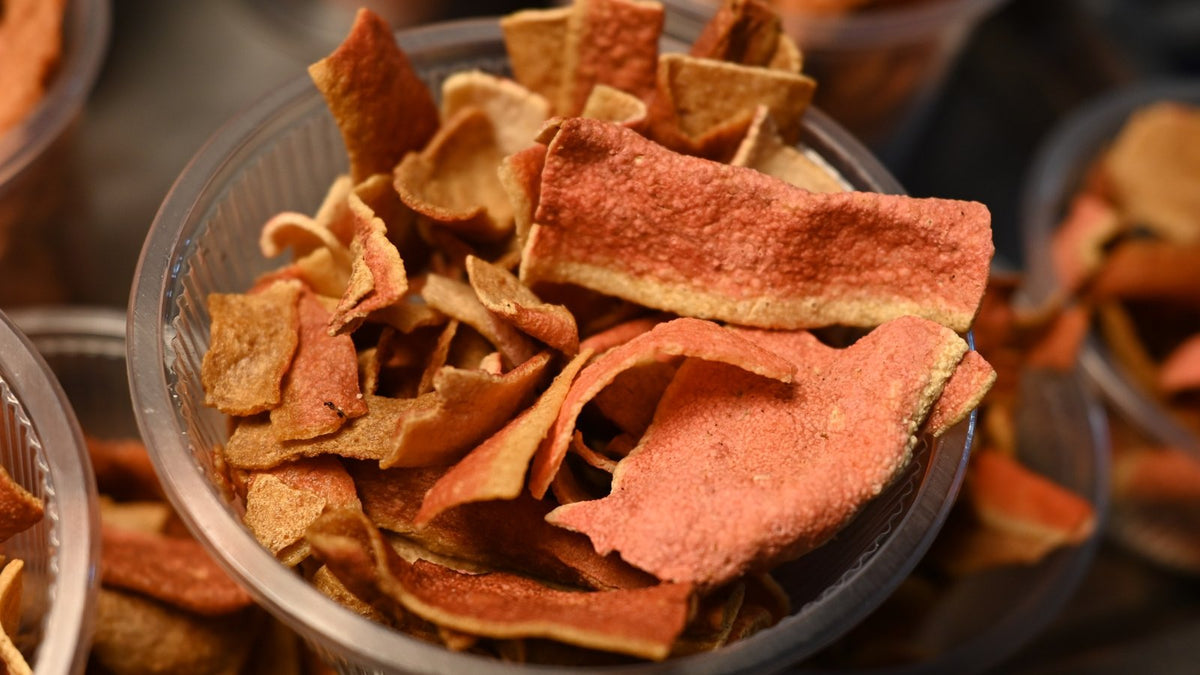
Photo: PattayaPatrol, CC BY-SA 4.0, via Wikimedia Commons